New FIREBUG Review: San Franscico Book Review

The Firebug of Balrog County

By David Oppegaard
Flux, $11.99, 312 pages Format: Trade

(4.5 / 5)

When his mother dies from cancer, Mack Druneswald tries to ease the pain by setting fires around his small town. As the firebug inside him grows hungrier and more ambitious, Mack deals with the trials of high school, his devastated sister and father, and his infatuation with a strange college girl named Katrina. But when his latest act of arson attracts unexpected attention, Mack finds himself in a curious game of cat and mouse with the law and the firebug within.

The Firebug of Balrog County burns hot and fast, gazing into the heart of a tragic moment and the odd ways in which we confront it. Mack is a marvelous narrator, full of humor and self-awareness and insight despite his many flaws. He inhabits the weirdly insular world we all did as teenagers, and even if we didn’t all turn arsonist, there’s plenty to identify with.

Although the book’s climax was inevitable, the path there (and the actual concluding circumstances) were unexpected and deeply satisfying. Every character felt real and consistent, Mack especially so. I would easily consider this book the equal of Oppegaard’s much-heralded The Suicide Collectors.

Reviewed by Glenn Dallas. Original review link is here.

Buy It On Amazon.com

Point of View (Part Two)

(I recently wrote a book on writing call The Glorious Grind: Meditations on Crafting Fiction & The Writing Life and have decided to simply publish it in installments here.)

The Second Person Point of View

In the second person POV the author addresses the reader as “you”, suggesting that the reader themselves is a character in the story.

You go to the hardware store. You see a clerk with a glittering eye. You buy worm killer from the clerk and then you return home. The worms are waiting for you. When you sprinkle the worm killer compound upon the worms they chuckle merrily. They have mutated far, far beyond the ability of any hardware store chemical to hurt them. They have also eaten your cat, Sir FuzzyFace.

This astonishing slice of prose is an example of a direct second person POV, as in the narrator is addressing the reader directly. An indirect second person address is more in line with a sentence like “You never know how tough worms are until they start attacking” or “You’d think Sir FuzzyFace could outrun some crawling worms but I guess he was too out of shape…”. The “you” in indirect second person is more a generalized, much vaguer “you” than you the reader.

Second person isn’t nearly as popular in fiction as first or third person and has traditionally been more prevalent in the self-help[1] and choose your own adventure writing genres. Second person can be jarring to the reader, who when initially addressed may instantly think to themselves, “Who the hell do you think you are, telling me what I’m doing?” and even when second person is well-executed it tends to wear the reader down, since they’re not only fighting to suspend their normal I’m-reading-fiction-but-it’s-true sense of disbelief but a second layer of disbelief on top of that (the writer can’t really be addressing me personally—he doesn’t even know me!).

Second person can be fun to play with in short doses, though, and there are some interesting modern and post-modern things you can do with it if you’re so inclined.[2] I think there’s some untapped potential in the indirect “you”, something philosophic about it, and the direct “you” can be used to great comic effect, but you won’t be finding me grinding out an entire novel in the second person. Even I’m not that crazy.

You know what I mean?

The Third Person Point of View

Third person narratives are told by the author and utilize he/she/they when referring to characters. Third person is the heavy duty workhorse of fiction, capable of running the gamut from god-like omniscience to sparse, objective prose that describes only what is physically happening in a scene without comment, like stage notes for a play.

To briefly recap our point of view signpost words:

First person POV

I set fire to the apartment and boy did the worms scream.

We set fire to the apartment and boy did the worms scream.

Second Person POV

You set fire to the apartment because you can see no other way to stop the worms.

Third Person POV

He/she ran out of the apartment and went down to the street.

They could hear the mutated, cat-killing worms screaming for miles.

One thing to remember is that when a fictional character is telling a story they can easily slip into the third person narratorial style because they are telling a story inside a story. A character might speak in the grand, sweeping style of a novel’s author, they might go all Tolstoy for three hundred pages, but eventually their tale will end and return to their fictional, first person self and with all the considerations of fallibility, ulterior motive, and unreliability the first person POV implies.[3]

The great strength of the third person POV is the high degree of control it allows the author, from the rarified strata of manipulating time and space itself to ground level, sentence by sentence prose. In third person you can read a characters’ mind, you can peel their heart like it’s an orange, and when that gets old you can flit to the story’s next character and start peeling all over again. You can show the reader what it’s like to be a dog running on the beach, or a tree lashed by a summer thunderstorm. You can take the reader back to prehistoric times or send them hurtling into the future. You can reimagine history altogether. You can travel to other planets, other worlds.

Yet handling the third person POV is like a driving a touchy, very expensive race car. The car will run fast and respond to your every whim, no matter how minute, but you better make sure you have firm control over it lest you go crashing into the track wall. No matter what point of view you’re using you want to make damn certain the way you’re using it A) makes sense B) is consistent and C) serves the story (as opposed to being a liability). This has to do with reader expectations, the oft-mentioned author-reader contract that assumes you, as the author, know what you’re doing and not wasting everybody’s time. As I mentioned earlier, readers grow invested by the page and don’t take kindly to sloppy, infuriating behavior.

Here’s an example of poor control in the third person POV and the chaos it can create, with footnotes to annotate the problems.

Sam picked Kelly up at seven o’clock. She was looking real hot but Sam didn’t say anything because he was so nervous. He’d been looking forward to their date all week and was wearing his fanciest boxer briefs.[4] Each fiber of his boxers yearned to be sitting on the couch back in their apartment and not on the date. They had come so far from their humble beginnings in the cotton fields of Georgia and felt that blind dates were undignified[5]… Arf![6] Kelly opened her purse and chuckled. Ha, ha. It was her tiny dog Horace—he’d stowed away because he wanted to go on the date, too.[7] Lady look happy! Lady smell like tasty makeup want to lick lick lick lady face![8] Oh boy, he thought. She had a tiny dog.[9] That was a huge red flag as far as Sam was concerned. What had he been thinking, leaving the comfort of his apartment to cavort with a stranger who carried a tiny dog in her purse?

The man and the woman emerged from the apartment building.[10] The man hailed a cab and the woman peeked into her purse. Traffic passed by on the street. It started to rain lightly and the sparrows shivered in the trees. It was a night like any other in New York City, a night of desolation and frivolity, of gumption and lust, like so many I’ve seen myself,[11] and, inside their secret hearts, everybody in New York was absolutely terrified.

With great power comes great responsibility. An author using the third person is well-advised to set some boundaries early on and decide how much they want to reveal. As with using the first person POV, they need to make decisions pertaining to temporal, psychic, and spatial distance and then they need to stick to these decisions in a reliable manner that does not confuse and infuriate the reader. Part of learning the craft of writing is being able to maintain a consistent tone and to write with clarity when clarity is needed. Authors like Zadie Smith and David Mitchel manipulate point of view with apparent ease, sometime switching between various elements of POV multiple times in a single scene, but they are highly aware of what they’re doing and only doing so in order to achieve a purpose that suits their story—they’re not doing it just to show off and prove how clever they are.

As for me, I usually find that the third person limited past tense POV works best for my writing and have come to rely on it more and more heavily. I like having the limitation of only viewing what’s going on in the head of one character at a time (even switching POVs once in the same chapter has started to bug me. If I’m rotating between characters and their thoughts I prefer to have a nice clean line break between them, like a psychic pallet cleanser). I don’t really feel I have the knack for total godly omniscience (unless I’ve been drinking whiskey) and I’m too nosy to sit back and watch my characters from afar while they ponder aloud how the hills look like white elephants. I want to get close to them. I went to feel their particular heat, feel their heartbeat, and see their point of view.

[1] Like this very book!

[2] I’m thinking of Italo Calvino’s novel If On a Winter’s Night a Traveler and Lorrie Moore’s great short story collection Self-Help.

[3] So basically this theoretical book would be mainly in third person but with a first person bookend framework established around it like many a classic tale that begins with a wild-eyed character saying something like, “Have I got a story for you…”

[4] Doing well so far. We’ve started in a limited third person—we get a peek into Sam’s mind but not Kelly’s. “She was looking real hot” gives us a little of Sam’s voice and pulls us into a relatively close psychic distance.

[5] Real sharp POV turn here-suddenly we’re seeing the scene through the eyes of the cotton fibers in Sam boxer shorts, which has no apparent bearing on the rest of the scene and is pretty weird.

[6] Who hears this “arf”? Sam? The cotton fibers? Is it an objective detail provided by the author? We may never know.

[7] Now the reader has jumped inside Kelly’s head without warning.

[8] Now we’re inside the Horace’s head and he’s a fricking idiot.

[9] Now we’re back in Sam’s head to see out this disastrous paragraph.

[10] Oh boy. Now we’ve pulled back to a more remote objective distance (a big favorite of Ernest Hemingway). The narrator is only relaying the scene and we’re not in anybody’s head. Sam and Kelly have been replaced by “the man and “the woman”.

[11] Now the author has decided to intrude on the narrative and round it up with big words and a final dash of omnipotence.

Point of View (Part One)

(I recently wrote a book on writing call The Glorious Grind: Meditations on Crafting Fiction & The Writing Life and have decided to simply publish it in installments here.)

Chapter Eight

Point of View

Point of view as it pertains to literature is the viewpoint an author chooses to tell a story from. A story’s point of view, or the angle it’s told from, falls under the three main categories: third-person, second person, and first person.

The author’s selection of POV is all-important because whatever vantage point they use will affect how the audience interprets the story and indeed how a story’s plot progresses. For example, if the story is told by the character themselves the reader can pretty much ascertain that the character isn’t going to be killed during the story (because otherwise how is she telling us the story in the first place?[1]) which has the effect of lowering the story’s stakes at the outset, downgrading it immediately from life-or-death to life-or-something pretty bad. Or, let us say, what if the story is being told by an outside party, such as another character in the story—how much information should be relayed as the story unfolds and how much access to information does the narrator have? Do they know everything? Just a little? How do they know what they know and what exactly should be relayed to produce the author’s desired effect?

You see what I mean? Digging into point of view opens up a whole can of worms. What I’ll do in this humble little chapter is cover a few basic POV terms I’ve personally found helpful to know and then give a brief overview of each main literary POV, pointing out the pros and cons of each as I see them. If you’d like a full textbook-style rundown on POV I happily point you to Writing Fiction: A Guide to Narrative Craft by Janet Burroway.

Psychic Distance

Psychic distance describes how either close or detached a reader feels to a character. Does the reader have access to a character’s inner thoughts, as if she’s reading his mind? Or is the character totally remote from us, like any stranger walking by on the street? Or at some point in-between on the psychic distance spectrum?

This is also sometimes called narrative distance.

Temporal Distance

Temporal distance describes how recent the events being described in a narrative are. You’ve got your present tense—meaning the event is happening right now—past tense—meaning the event has already happened—or future tense—meaning the events are occurring at a future date from our present time.

Spatial Distance

Spatial distance describes how close we physically are to a character. Are we seeing things through his eyes as the story moves along or are we pulled back to a middle distance? Think cinematography and close-ups and mid-distance shots and panoramic shots. Think visual perspective.

The Unreliable Vs. The Reliable Narrator

An unreliable narrator cannot be trusted and is usually telling us the story with some kind of hidden agenda of their own. Unreliable narrators are tricky as hell to pull off. How long do you usually listen to a story somebody’s telling you once you realize they’re either omitting crucial details or lying to you outright? Every politician who’s ever been caught with a hooker has instantly become an unreliable narrator (if they already weren’t before).

On the other hand, a reliable narrator’s story can be taken at face value as true, though rarely is any narrator totally reliable and most narrators fall somewhere on the spectrum between reliable and unreliable (such is the fallible nature of memory and truth).

Omniscient Narrator

An omniscient narrator possesses a god-like knowledge of everything in a story. He’s a real know-it-all. The author’s big challenge when using this POV is deciding how much information to relay and at what pace. You don’t want to overload your reader with information or bog down the story.

Limited Narrator

A limited narrator knows some things but not everything. By using a limited POV an author can convey juicy inside knowledge like what a character is thinking while retaining the inherent tension that comes with uncertainty.

Oral vs. Written Narration

Oral narration is a story that is related verbally, like somebody telling you a story at a bar. Written narration is a story that’s written down and comes in a variety of formats, such as journal entries, letters (the “epistolary novel” tells its story mostly through correspondence, such as Dracula), reportage, confessionals, manifestos, etc.

#

Okay, now let’s move on to the three main POV categories themselves and get out of here before those worms from that big can we opened earlier devour us.

Oh god, they’re starting to glow…

The First Person Point of View

The biggest giveaway that a story is being told from the first person POV is the use of the letter “I” or “We”. If you see a sentence that starts with a big old capital “I” as in, “I went to the store to buy worm killer…” you’re reading a story told in the first person. “We” is the plural form of “I”—whoever is speaking/writing is being accompanied by at least one other character in the story they are relating.

In many ways, the first person POV can be the simplest point of view to utilize because we all have a lifetime of experience talking about ourselves and telling stories about ourselves. The “I” who is telling a story in a work of fiction is either the main character involved in the story or a character on the periphery of the action.[2] They can tell the story in the present tense (I’m walking to the store…), the past tense (I went to the store…), or the slightly crazed/prophetic future tense (I shall go to the store and buy worm killer!). They can relate their story aloud verbally[3] or convey it in some written format (i.e. oral or written narration). They might be in earnest or they might be lying through their teeth (i.e. reliable or unreliable).

The key thing the author of a first person story must decide, sooner or later, is who the hell the first person is addressing and how directly they’re addressing them. Are they addressing a general unseen audience (a popular indirect choice)? Someone who has wronged the narrator greatly (a spectacularly direct choice)? A jury? Their family at Christmas dinner? If it’s an oral narration, the author must decide the context in which the narrator is speaking to their audience. Are they cozied up together in a diner booth? Traveling together on a pilgrimage like in The Canterbury Tales? Or perhaps at a wedding like in “The Rime of the Ancient Mariner”?[4] Whatever the location, hopefully it’s somewhere pretty comfortable if this is a whole goddamn novel we’re about to listen to, with some snacks at hand (though readers are generally willing to suspend their disbelief in this area if the tale’s compelling[5]). If it’s a written narration, the author has the somewhat simpler decision of choosing the narration’s format (such as imbedding the entire story in a letter that has been delivered by post on a dark and stormy day).

Then, once all this logistical stuff is sorted, the author of a first person story would be advised to consider their narrator’s motivation for telling the story and their ultimate goal in telling it. Is this a confession of wrongdoing? A warning? An explanation? An argument with the intent to convince the other party of something crucial? The motivation for telling a story and the ways it’s told reveal much about the storyteller and happily this is all through indirect revelation, showing and not telling, and even a peripheral character who is telling a story about someone else becomes part of the story simply by relating it. The character’s motivation to tell a story may not be clear to themselves but it should be clear to the author, who might not figure it out until several drafts in (and if this is the case guess what? Time for another draft to make it look like you knew all along!).

And, surprise surprise, when you figure out your character’s motivation for telling a story you’re better prepared to judge the story’s conclusion and its effect both on the fictional audience and the reader themselves and hopefully, if everything’s fallen in place just right, the way the story has been told and who it’s been addressed to and the manner it’s been conveyed will all enhance your story’s intended effect, whatever that may be.

I’ve historically been hesitant to use the first person POV. Out of the fifteen novels I’ve completed I’ve written only two in the first person (and both of those were young adult novels—hmmmm…). I don’t know why this is, exactly. I’ve written several short stories in the first person and it served me well in the two novels I did use it in. I suppose it has something to do with the inherent difficulty of creating a narrator who can be interesting for the entire long haul of a novel. A reader can only absorb a character saying “I” this and “I” that for so long before their mind starts to drift, like talking to a windbag who’s cornered you at a party, so both the narrator and the story she’s telling need to be as compelling as possible throughout the entire novel. One false step in a first person narrative and the reader can feel like they’re being spoken at instead of being woven into the story and once that happens they begin to feel detached from the text and, as in romantic relationships, detachment can be an initial step toward breaking up. While relating a story in the “I” format is something I’ve been doing naturally all my life, I don’t find it as natural a process on the page, where you must wear the added mask of the character telling the story while unspooling the story itself—telling a good story alone already consumes so much of a writer’s energy!

The great argument in favor of the first person POV is voice, which it can provide in a splendor and quality that the other POVs cannot match. Through first person narration we experience the story raw and unfiltered, in the character’s own voice, and a compelling personality, with all its raggedy imperfections and soul wringing, is crucial—a storyteller should be nearly as compelling as the story itself.

[1] Unless she’s a ghost or an angel or something crazy like that.

[2] A classic example of the peripheral first person narrator is Nick Carraway from The Great Gatsby: “In my younger and more vulnerable years my father gave me some advice I have been turning over in my mind ever since.”

[3] Huh. I wonder if a character has ever told an entire novel length story to other characters via sign language. Would that count as oral narration or what? Body relation?

[4] “He holds him with his glittering eye—

The Wedding-Guest stood still,

And listens like a three years’ child:

The Mariner hath his will.”

[5] Though when I’m reading a first person oral narration I always shake my head around a hundred pages in and ask myself, “Really? This other person is just sitting there listening to this long ass story? This would take five or six hours to listen to.”

Researching for a Novel

(I recently wrote a book on writing call The Glorious Grind: Meditations on Crafting Fiction & The Writing Life and have decided to simply publish it in installments here.)

Chapter Seven

Research

Penka, the Green Sea-Cat monkey, plays with a book which was given to him as a Christmas present by zoo-keepers at Varna Zoo

Nearly all professional writers preform a certain amount of research as they prepare and polish their work for publication. Research, especially for a novel, is taken as a given in Fiction Land and all lazy naysayers are swiftly struck down by the fiery sword of researching righteousness, which may be wielded by critics, creative writing professors, or cranky veteran authors who love to decry the googlefication of research and how all our brains are slowly regressing to a jellyfish-like goo as modern technology chips away at our ability to think critically, much less properly research a serious novel.

Which may be true, but do they have to rub it in? Christ! Don’t we all have enough problems, such as remembering BOTH our online logins and passwords? And getting our tweets posted while we’re driving on the freeway? Or getting our nude pics texted while we’re officiating weddings? Or trying to catch up on all twenty seasons of our beloved reality TV shows about people doing stuff and yelling about stuff? Do these stodgy old blowhards really need to point out how online research is insufficient and shallow and a mockery of all that is good and right in the world? Goddamn it, go write Moby Dick 2 already, you James A. Michener wannabe killjoy motherfuckers! Let the rest of us rot and pretend Wikipedia is reasonably accurate already. God. There’s the door.[1]

If you’re a big academic nerd type (which, let’s face it, is highly likely if you’re reading this here book on writing) you’ll likely be quite at home in the library and comfortable with text-based research in general. However, if you’re the type of person who didn’t exactly enjoy school, much less academia, the sort of Joe or Jill who hated writing academic papers, you may be dreading researching anything for your story and feel strongly compelled to just wing it and let the chips fall where they may. Screw it, you’ll say to the hand puppet you’ve made out of an old sock (because you can’t afford proper therapy because you’re a writer now), I’m going to write this book and let my editors worry about the little details. I’m a big picture author! My true work is tunneling into the heart of darkness that lies within us all, not researching the mating habits of the spiny lumpsucker or the pleasing fungus beetle!

Going to the library? you screech.

FUCK THAT SHIT.

Well, you don’t have to research jack squat if you don’t want to and you might even manage to pull it off for a book or two. Yet, like everything else when it comes to writing, research laziness will come back to bite you in the ass sooner or later and you’ll come to regret it down the road. Research can be a powerful tool for a writer and choosing to avoid it, or half-ass it, is akin to going into battle missing a key component of your armor. A solidly built fictional universe relies on concrete details and our own reality already provides said details in droves, creating an instant link between author and reader. If you can name and describe something relatively unknown to a wider audience it gives you additional authority. This is why we’re oddly comforted by medical specialists when they casually throw out terms we don’t understand—you’d be alarmed by any heart surgeon that couldn’t name the individual parts of a heart, right?

One thing that helps make researching your novel or short story more palatable (and seems extremely obvious once you dig into it) is investigating topics you’re personally interested in learning more about. It’s possible you’ll come to be engrossed in any topic you take on, from property zoning laws to eighteenth century British law, but if you’re already resistant to the idea of research in general, you might as well make it as fun as possible. Why not, right? When I wrote The Suicide Collectors I was interested in the psychology behind suicide, when I wrote Wormwood, Nevada I was interested in meteors, and when I wrote And the Hills Opened Up I was interested in wild west-era mining towns. I incorporated topics I was already interested in—I wove my own passions into the fabric of each world I was creating and sat back as the facts helped inform the fiction.

#

            I take a scattershot approach to research that seems to fit my scattershot brain. I utilize my local library in the same spirit as a spider uses its web: I request every book that looks remotely useful/connected to a subject and skim through each one as it arrives, retaining the ones that look promising and returning the others straight off. If I really find a book useful, I buy a copy to keep on hand for the novel’s entire gestation period and beyond. I don’t read every book cover to cover, but when I hit hot spots of information I slow down and take notes in my writer’s notebook. I collect raw information, sure, but what I’m really looking for are details that paint a vibrant picture in my head and could possibly enhance the fictional dream I’m striving to create. I haven’t taken a formal poll or anything, but judging from the interviews I’ve read[2] most writers usually only end up utilizing only one or two percent of the raw research they generate, yet most claim this small percentage ends up being crucial to their narrative.

I also draw maps of the towns and cities I’m creating in my writer’s notebook, as well as floorplans of the story’s main buildings. My drawing skills seemed to have peaked when I was in the seventh grade but even my crappiest drawings still get the job done—these sketches are for my own personal use and I’m not trying to win any beauty contests. I find going into a story (particularly an advanced draft) with a concrete sense of where everyone and everything in the story is located helps me paint a more vivacious picture and keep track of all the shit that’s going on. They also help me figure out where my characters should go next—what part of the map remains unexplored? What part of the map seems most interesting, or most likely to have an important, reoccurring role?

I’ve been addressing literal research[3] so far in this essay, but there’s a less factual type of research I engage in as well, a kind of mental reconnaissance that has more to do with dreaming the story I’m working on into creation. This involves reading poetry, non-fiction, surfing the internet, watching movies and TV, idly listening to music, talking with folks, exercising, camping, hiking, walking around the city, going to concerts, and generally forming mental connections that will hopefully grow into something larger as I continue to work on the project. A writer doesn’t have time to devour every form of media (nor would such all-out consumption be something particularly desirable, even if it were possible) but the general hope is that if your radar is up and you’re doing your best to be a citizen of the world this engagement will shine through in your work and make it that much more engaging to your readers. I’ve read a lot of late-career books by famous authors who obviously thought they’d grown bigger than the world itself and could therefore ignore it and still produce a compelling novel but nope: inevitably the novel was a big steaming pile of hubristic crap.

Researching a novel or short story doesn’t need to be dull, but it does involve labor. Research is another part of the Grind and a particularly unsung part at that. You’ll feel an urge after doing so much legwork to throw as much of your research into the text as you possibly can but I strongly urge restraint at this point. Remember, your goal is not to hammer your reader over the head with facts and figures but instead to blend all those notes you’ve taken into the fabric of your story. Research can serve as inspiration, cosmetic enhancer, and a type of authentic foundation, but in fiction it should never serve as a substitute for a true story, one with absorbing characters and a plot that compels the reader to keep turning that page.

[1] No wait-it’s actually a trap! You just walked into my closet, fucker.

[2] When I was starting out I was really into reading author interviews but the longer I write the less interest they hold for me. I don’t know if this is because I’m able to detect a familiar pattern in nearly every interview, which makes them less potentially revelatory (and thus less interesting) or if because I’ve basically figured out what works for me as a writer and I feel sorted out, more or less—once you’ve been driving a car for a while you don’t really feel the urge to sit around and exchange driving tips with other drivers.

[3] By the way, go ahead and email experts in various fields if you feel a hankering for some inside information about a subject—if you’re polite and professional about it I’d wager you’d get a useful reply. Experts love to talk about what they’re passionate about and you might even end up making a useful friend out of the exchange.

Characters

(I recently wrote a book on writing call The Glorious Grind: Meditations on Crafting Fiction & The Writing Life and have decided to simply publish it in installments here.)

Chapter Six

Characters

gunslinger88roland

A great character is a boon companion to a writer. They can generate sharp dialogue, improve any scene, generate plot through their actions, and invest a reader in a story no matter how surreal or farfetched it may be. A great character will be remembered by the reader long after the book has been closed and all the machinations of plot have been forgotten and scattered to the wind. Characters have the potential of transcending not only the stories they inhabit and, like Sherlock Holmes or Jane Eyre, the career of writer themselves. Characters are how the reader most naturally enters a text. Characters are what stick with people.

But what makes a great character, exactly? What is the lightning a writer needs to catch and put into their fictional bottle?

Details, baby. Details.

A great character is a combination of specific details, both external and internal. Let’s break down some of the possibilities.

External Details

  • Age
  • Gender
  • Race
  • Nationality
  • Height
  • Weight
  • Facial features
  • Skin features (like color, freckles, etc.)
  • Body features (like broad shoulders, muscle tone, etc.)
  • Eye Color
  • Hair (color, length, style)
  • Dress
  • Speech (patterns, accents, tone, etc.)
  • Conspicuous mannerisms, gestures
  • Singular identifiers (like a tattoo or a scar or a peg leg, etc. 

    Internal Details

  • Emotional State
  • Thought patterns
  • Internal voice
  • Degree of Intelligence
  • Motivation
  • Sense of humor
  • Sense of morality
  • Sense of sexuality
  • Personal history (this is a big one, obviously)
  • Self-perception
  • External perception
  • Philosophic/Religious Views


These are just some of the details an author can choose to pack into a character and both lists could run much longer, I am sure. What an author looking to create a well-rounded character needs to do is pick and choose details that will both flesh out a character through what they imply about that character and enhance the overall story the character is participating in. (For example, if you’re writing a farce comically arrogant characters make great foils. If you’re writing a mystery, curious characters make great detectives. If you’re writing an epic fantasy quest, persistent characters make great heroes. And so on.)

Not only does the author need to pick the choice details, they need to get them established as soon as possible. Like aspects of setting, a reader is scanning your characters from word one and trying to get handle on them. Clarity is important and so is the appropriateness of each detail. If a character is stiff and unnatural, and her actions not in line with what has already been established about her, the thin veil of fiction a writer has worked so hard to maintain throughout a narrative suddenly falls away and the reader sees the story for what it really is: paper dolls cut out of words and made to dance.

Readers have a natural tendency to see themselves in characters—well not themselves, exactly, but aspects of themselves they can identify with. It doesn’t matter if a main character is a complete villain, either, since readers are generous souls and can find sympathy even for the devil as long as he’s portrayed in a compelling manner (in fact, readers really like siding with villain—Satan comes off as heroic in Paradise Lost and he’s fighting to overthrow God). Romance authors understand this empathetic tendency as well as anybody and play it for all its worth—it’s not really Sherry Sexypants who’s having guilt free sex with that burly cabana boy, it’s their breathless readers. Characters are portals through which the reader enters a text and how they view the story’s world, which is why it is so crucial that a reader care about them, the more deeply the better.

The technique that is often suggested in developing a character is the authorial interview (that is, the author creates a bunch of interview questions and then answers them with the character’s personality in mind). This method is fine, I guess, but it’s always felt a little too much like homework for my tastes. Also, I believe characters are best discovered and their personalities revealed through action on the page (i.e., the classic show don’t tell school of writing philosophy), even in the nascent getting-to-know you stage of a story’s composition.

Here’s a couple of basic character exercises I’ve used in class to help get my students’ characterization muscles warmed up.


The Teenager
Describe an adult party with all its little sordid details from a teenager’s point of view. Extra vehemence and/or anguish is encouraged.
The Eccentric
Using a detached third-person point of view, create a very eccentric character and have him or her interview for a job. Try to unspool the character’s eccentricity slowly through a chain of revelatory details, building to a crescendo.[1]
The Creep
Describe a scene on a train through the point of view of your main character. A stranger sits down across the aisle and your character gradually decides this stranger is one creepy, creepy individual.
The Alien
Describe going to the mall or some other large public venue through the eyes of an extra-terrestrial that is somehow passing, externally, for a human being.[2]


Beyond creating an interesting main character who’s fully engaged the reader’s attention an author needs to make sure that character is both active (as opposed to passive—nobody wants to read a story about a guy sitting on his couch sitting quietly all day without a thought in his head) and who contains the capacity for change. Like a full-sized rainbow, a fully formed character should have an arc throughout a story (especially the long novel) which finds them changed, to some degree and in some way, by the story’s end.[3] A great character feels conflict in their heart and seeks to resolve that conflict. They have goals that can run the gamut from meeting basic needs like food and shelter to finding love or coming to terms with death. A great character strides across the page, trying to achieve some discernable goal, and seems to glow in the mind’s eye—they’re the person you’d be naturally drawn to at a big party. The person you’d want to learn more about.

Here’s a few of my favorite classic characters and why I find them compelling:


Don Quixote—Don Quixote by Miguel de Cervantes

Inspired by a love of courtly tales and in possession of a feverish imagination, Don Quixote goes “questing” across Spain. He may be delusional—for example he attacks windmills because he believes he’s a knight and they’re evil giants—but Quixote is also hopelessly optimistic, comical in his self-righteous arrogance, and a tragic figure as his delusions eventually fall away. He’s Captain Ahab’s dopey, more loveable younger brother and his relationship with his “squire” Sancho Panza is one of literature’s great all-time friendships. The reader follows along on Quixote’s many adventures while feeling the same kind of love you’d feel for a goofy relative.


Nastasya Filipovna—The Idiot by Fyodor Dostoyevsky

The beautiful, smoldering heroine of The Idiot, Nastasya is a woman split between two powerful inclinations: either opening her hardened and much-wounded heart and allowing herself to love a good man or serving herself up to sexy self-destruction. The reader can never be certain what Nastasya is going to do because she doesn’t know herself. Her attraction to both the novel’s hero and the novel’s anti-hero is so strong it feels radioactive. She’s a hot mess and a hot mess is so damn interesting.


Offred-A Handmaid’s Tale by Margret Atwood

The first person narrator and main character of A Handmaid’s Tale relates her tale in a manner that’s riveting from page one. Offred is both the screw around which the novel’s plot turns and a distinct voice that breathes life into the novel’s dystopian setting: she’s both the camera and the lead actor. She’s also a budding rebel who eventually attempts to seize control of her own fate despite existing in a tightly regulated and very dangerous world. And who doesn’t love a rebel, right?


Ignatius Riley—A Confederacy of Dunces by John Kennedy O’Toole

A joyously Falstaffian character with a penchant for comically weird phraseology, losing his temper, arguing with his mother, getting fired, taking baths, and writing wildly inaccurate histories, Ignatius Riley is both bigger than life and a lot like somebody you’d sit next to on public transit. Here’s a character you love because of his flaws, not despite them.


Sethe—Beloved by Toni Morrison

Sethe, who has escaped the horrors of slavery and now lives in Cincinnati, is haunted both literally and metaphorically. Her home is beset by a spirit prone to violently throwing objects and her conscience is deeply troubled by the two-year-old daughter she’s killed years earlier. Sethe is a nuanced, traumatized character whose struggle to face and process her own past is so entwined in the plot of Beloved it is hard to imagine one without the other. Sethe is a textbook example of what academics mean by “character driven narrative” and her plight grips the reader all the way through.


Roland Deschain of Gilead—The Dark Tower series by Stephen King

Roland is the classic Clint Eastwood/Western movie hero with a twist: he is a survivor of a world that has long faded into legend and thus is imbued with a welcome weirdness. On one hand he’s your standard The Hero with a Thousand Faces-type character, hell-bent on reaching the Dark Tower come what may, but on the other hand he possesses a uniquely dry gunslinger-type sense of humor and quirky talents that go beyond being a badass quick draw artist. Roland’s motivation is clearly defined and his personality is pleasantly drawn out by the traveling companions he meets along the way. With Roland, Stephen King took a classic ideal and twisted it into something new.


Cal/Calliope—Middlesex by Jeffrey Eugenides

An intersex character with a genetic condition that gives him female characteristics and causes him to be brought up as a girl until the age of fourteen, Cal/Calliope’s story is a such a whopper of a tale the reader keeps turning the page to find out how it all went down, even during the novel’s baggy and digressive first section. Middlesex is not so much character driven as it is character sweetened, with each gradually revealed Cal/Calliope detail acting as a fresh spoonful of honey. Sometimes writing is simpler than you think: just give the reader something they haven’t seen before and they’ll follow you almost anywhere.


I used to resent the effort required to flesh out characters. I was more into plot and setting and making everything go boom. I didn’t care what color my character’s eyes were or what kind of grades they got in high school or how many times they’d fallen in love or if they wanted to have kids some day. I wanted to zip along and write fast and die young. But a funny thing happened to me along the course of getting older and writing so many novels—I started caring as much about the characters as any other aspect of my work and my characters rewarded me in turn, coming alive in my mind like the kind of close, real life friends you have conversations with in your mind sometimes. This is one of the many positive effects writing fiction can have on a human being—this encouragement and development of empathy—and not a bad return for the investment involved.


[1] Okay this one is a variation on the character interview, I admit.

[2] This results of this prompt are always good for a laugh.

[3] Unless the point the author is trying to make is that the character doesn’t change, then…yay?

Setting

(I recently wrote a book on writing call The Glorious Grind: Meditations on Crafting Fiction & The Writing Life and have decided to simply publish it in installments here.)

Chapter 5

Setting

            Where you set a story can be closely partnered with the type of genre(s) you’ve chosen to work in. A speculative fiction story is necessarily set in the future, historical fiction is set somewhere on our known earth in the past (and usually involves a historically important moment or figure), a fantasy story can be set in our world but is most commonly set in an elaborately constructed world the author has built from scratch, a work of literary realism (I’m thinking Ray Carver, Alice Munro, the whole kitchen sink fiction set) is not only set in our known reality but it prides itself on its ability to describe our reality as accurately as possible. There are even genres and subgenres with names that describe their setting: a traditional Western is set in the American Old West sometime in the 19th century, Urban Fantasy is a genre of the city, Space Opera occurs in, you guessed it, outer space.

Setting is not simply background dressing for your story—if utilized properly it becomes a character of its own and positively effects a story, providing a mirror for the characters passing through it and a helpful co-conspirator with a story’s plot (such as in every book ever set in a remote, isolated location where Something Bad is about to happen). A good setting helps develop and enrich a story’s tone and gives your reader something concrete to sink their teeth into, an environment that may be new to them and thus as compelling as the plot of the story itself, giving them an additional reason to keep turning that page. Setting can be used to mirror a character’s emotional state (the Gothic vampire broods in his dark mansion, the blackout curtains drawn as he waits for night to fall) or contrast strongly against it (the girl who has just learned her mother is dying goes out clubbing with her friends). An author’s description of the physical world their characters inhabit provides a mental map for the reader they will check back in on from time to time as the story progresses, grounding them in the narrative in a way only sensory details can.

Speaking of sensory details, when creating a setting an author is well-advised to recall and utilize all five senses: sight, touch, hearing, smell, and taste. Don’t just tell us what the swamp looks like, describe how it smells and how its critter inhabitants cry out in the throes of their swampy existence. How does it feel when your character steps into that murky swamp water, how does that twig taste when he chews it with absentminded preoccupation.

Here’s a writing exercise I came up with for my students that usually helps getting the old sensory juices flowing:

The Bounty Hunter

Your character, a bounty hunter, has pursued someone into a sprawling city landfill on the hottest day of the summer. Describe their pursuit of their prey using all five sensory details (sight, touch, hearing, smell, taste) and try to pack in as many details in as possible.


The results of this writing exercise are usually exquisitely disgusting and leave little doubt as to where the story is set.

Personally, I’ve utilized a multitude of settings but seem to return to one in particular time and time again, like an old dog always finding his doggy way home. The majority of my strongest work, through no conscious decision of my own, has been set in a small town somewhere in America. Which I used to find strange, since I’ve lived in the heart of a city for the past thirteen years or so and didn’t particularly enjoy the small town experience, but I did grow up in a small town and I suppose my mental map was already very much developed by the time I left to go to college.[1]

Yes, I guess I shouldn’t be surprised that small towns are in my wheelhouse, though they aren’t the most glamorous of settings. We are, after all, products of our environment, whether we want to be or not. What else can we expect of our writing, which is the purest distillation of ourselves and our dreams? Where else would our internal map takes us, even during our wildest flights of fictional fancy, but back home?


[1] I’ve written only one novel explicitly set in my home state of Minnesota. I suppose I’ve been worried about being labeled as a “regional” author but I also think I thrive on describing a world that isn’t totally familiar to me, which seems to provide an extra degree of freedom. Even my Minnesota novel was set in a fictional town.

Taking a Break/Genre & the Elevator Pitch

(I recently wrote a book on writing call The Glorious Grind: Meditations on Crafting Fiction & The Writing Life and have decided to simply publish it in installments here on my blog.)

Chapter 4

Taking a Break

Don’t be afraid to take a break after that first sentence, that first page, or that first session of writing. Refreshing breaks are a crucial part of writing strategy and I cannot commend them highly enough. Go fold your laundry or take a walk or play with your pets. Make some tea. Go check again to make sure your car hasn’t been stolen. I like to lay down on my bed (which is conveniently located two feet behind my desk chair, one of the many benefits of the mighty home office) and heap pillows and blankets over my head and sort of float above my body until I feel inspired to write some more.

Writing is a marathon, not a sprint. You don’t want your brain to overheat and catch on fire, do you?

No. The smell of burnt cerebrum is awful, trust me.

Chapter 5

Genre & the Elevator Pitch

            Before we venture deeper into more sexy craft talk I suppose it’s as good a time as any to talk about genre and where you’re ultimately aiming this novel of yours. The concept of genre, or basically categorizing a work of art, harkens back to the ancient Greeks and they’re love of pigeonholing everything because they thought that would be the best and easiest way for the audience to understand what they were encountering (they were the original TV network executives). The Greeks wanted their poetry, prose, and theater strictly separated, with their own genre elements and genre signifiers, but it didn’t take long for the rambunctious concept of genre to mutate[1] and pretty soon tragicomedy emerged and then it was only a hop, skip and a plunge to the epic-literary-pulp-horror-dark comedy-spaltterpunk-zombie-comedy of manners novels we all know today.

I myself enjoy genre blending. Growing up I read everything at hand with no sense of propriety or even a fully formed awareness of what genre was (though I knew some stuff was set in outer space and other stuff wasn’t and I liked most of the stuff in space better) and I’ve carried a blatant disregard for genre boundaries with me from an early age. Over the course of fifteen novels I’ve written in literary-post apocalyptic-horror, dark YA fantasy, modern literary YA fantasy, horror-Western, straight up literary, suburban comedy, epic quest sci-fi, dark urban horror comedy, YA horror with a Laura Ingalls Wilder influence, literary-science fiction, dark quest surrealism, and probably a few more genres I can’t recall off the top of my head. I view genre like a snake regards its skin—I wear it for as long as it suits me and then I slough it off and move on to hunt somewhere else.

A propensity toward genre blending does have its drawbacks, however, especially in the marketplace. If you’re writing with an eye toward future publication sooner or later you’re going to have to figure out where your work is going to fit into the tightly pegged marketplace. A lot of beginning writers seem to fall into two categories when it comes to pitching their own work: either they’ve studied the current literary market in advance and know exactly what kind of book they want to sell, and therefore write, or they don’t know much about the marketplace (either through lack of study or simple indifference) and they simply write whatever the hell they want, labels and selling points be damned.

Both of these angles have their good points and their drawbacks. I can’t help but commend the market savvy writer for her knowledge and practicality while wondering if something intangible in the creative process is sacrificed in service of the almighty dollar, a little of the magical fairy dust that makes a work of fiction truly glow. On the flip side, a writer could toil for years only to come up with a novel with limited or no potential audience (at least in the eyes of an editor) and end up of having to eventually shelve that work with no income to show for it—thus is the ever-present risk inherent in doing whatever the hell you want with no eye toward a prospective audience.

Of course, the market savvy writer won’t necessarily write a book of publishing quality (indeed, I’ve noticed a lot of the savviest ones seem to come up with the least creative works) and the free spirit type writer could come up with a work so strange and wondrous it transcends the marketplace and rises to the top. Yet, all things considered, I suppose I’d wager on the writer writing with an eye toward the marketplace getting published over the free spirit writer, especially in the modern era, which is an admission that saddens the creative rebel inside of me yet now, in retrospect, seems painfully obvious.

You see, I once did not care about my prospective audience and did not write with an eye toward selling my work when it was completed. I wrote my first novel at the age of fifteen. I wrote it to amuse myself and to pass the time. I lived in a small town and I was bored. I didn’t even have my driver’s license yet. I sat down one day at our trusty black and white Apple II and started writing a short story. Before I knew it, the story had unspooled until it was thirty, then forty pages long, with no end in sight. More ideas came to me, more adventures for my character to have, more worlds for him to visit, and suddenly I was embedded in a sprawling novel that would come in at over four hundred pages long and, when printed out single page style and bound at Kinko’s, was heavy enough to subdue an angry llama.

My mom read my first novel, praised me, and then I put it on the shelf. The idea of selling it to a publisher didn’t really occur to me. I knew I was just starting out and the book was probably total crap, though I liked it. I just let my squirrelly teen brain percolate and life go by and got to work on the second book. It wasn’t until I’d graduated college and enrolled in an MFA program that I pursued publication in earnest by submitting a slew of query letters to agents.[2] At the time I was working on my fourth novel and I thought my work was finally polished enough to crack into the industry. I did find a literary agent to represent it but the book never sold.

But the next one, The Suicide Collectors, sold.

That was nine novels ago.

#

            The idea of the elevator pitch, a phrase commonly attributed to Ilene Rosenzweig and Michael Caruso, is simple: you find yourself riding in an elevator with an important industry someone and you have a brief period of time, say thirty second to two minutes, to pitch the project your working on.

What do you say?

How do you sum up this hot mess of a book you’re working on?

Why would someone want to invest in it?

Why would someone see it on a shelf and decide to buy it over all the other options spread out so enticingly before them?

What’s your angle?

#

            I wrote The Suicide Collectors as the result of a thought experiment. I was a big fan of the apocalyptic/post-apocalyptic subgenre of science fiction and wanted to come up with a new twist on what had become well-trodden ground. I chewed on the problem for a few weeks, going on long autumnal walks around the Highland Park neighborhood of St. Paul, until eventually the simple idea occurred to me: what if everyone suddenly gave up living? What if this apocalypse was more of an internal thing than an external thing?

Holy schnikes, maybe I was on to something here. Maybe I had my angle.

#

            The elevator hums merrily along. The important industry someone I’m lucky enough to be alone with asks what I’m working on. I smile. I know I’ve been writing a long time and finally have something polished enough for publication. This is the moment. I am prepared.

“A post-apocalyptic novel about a suicide plague and a few survivors who go on a quest to find a cure for it.”

The industry someone’s eyebrows give a brief approachable waggle.

Boom.

They’re interested.

[1] Chaos theory, anyone? I’m looking at you, Dr. Ian Malcom.

[2] I’ll talk about agents later, about which I receive by far the most questions, with my own work coming in a distant, distant second.

Writerly Preperations & The First Page

(I recently wrote a book on writing call The Glorious Grind: Meditations on Crafting Fiction & The Writing Life and have decided to simply publish it in installments here on my blog.)

Chapter Two

Writerly Preparations

Okay. You’ll need to prepare to write this book. You don’t want to walk in all half-assed and get your head blown off on the first day. This isn’t some kind of day at the beach (unless you’re writing at a beach). Read a lot of books (hopefully you’ve been reading books for a long time).[1] Read a thousand books. Two thousand. Then go get drunk. Get horribly sober. Stare into the maw of your own insanity and reflect on the precipitous nature of existence and how life may be snatched from you at any moment, like a leaf plucked from its branch by the wind. Chill out on your couch and daydream about your book. Think about your book while you’re doing the dishes or taking a shower. Let the story grow inside you for a while, long enough so that you at least have a toehold into this new, mysterious world, a wedge to start with. Your wedge can be something as simple as a character’s name or an image or it can be as complex as narrative theme you’d like to explore (such as JUSTICE, or LOVE).

Once you have your wedge into the story and feel confident enough to begin a few practical preparations are in order. Buy a lot of groceries and don’t forget the coffee, tea, sparkling water, trail mix, and some kind of candy to snack on when you need a little extra pep (I like gummy worms and red licorice). A big key to the writing process is the beverages—you’ll need to keep hydrated during these long hours at the desk. Nobody likes a writer with a dry mouth. And, speaking of desks, you’ll need to make sure yours is sorted out. Do you have fun tchotchkes to occasionally distract yourself with? I have a little Buddha statue I got at the Great Wall of China and a tiny red monster truck. I rub the Buddha’s belly for good luck. I like to rev up the truck and send it crashing into my cat when she sleeps on the floor in a manner a little too complacent for my tastes. I am a big fan of sandalwood incense or maybe a candle that smells like the woods, something I can burn both as an offering and as a source of olfactory stimulation.

I also listen to music when I write, but I know this isn’t for everybody. Sometimes it all gets too much, too many words, and silence is best. When I write I listen to albums I know already or my well-used Pandora stations. I find it hard to listen to new music because it draws too much of my attention to it. But I do find that the right music, played not too loud, acts as an aural focusing agent, like a sonic white noise blanket; music can inspire your writing even when you aren’t particularly aware of needing inspiration, one beautiful art form mingling with and subtly influencing another.

Okay. So now we’ve got our tunes playing and our larder well stocked and a refreshing beverage at hand and we’re ready to dive in, to write ourselves a novel or a collection of groundbreaking short stories. Hell yeah! Our time is our own and the page lies blank before us. Even our beloved pets seem to be watching us with a newfound respect and a breathless sense of expectancy. Is there anything I’ve forgotten to add?

Oh yeah.

Patience.

You’re going to need lots and lots of patience.

Patience with the process, patience with yourself. Patience with the characters you’re going to be forced to slowly unwrap and name and describe and agonize over and put through the narrative wringer. Patience with the world your building, line by line, and patience with the events that occur in this fictitious world—the plot—which will seem to zigzag wildly as you pursue this first draft or, as if often the case, go nowhere particularly interesting or powerful. There will be days when you feel as if every word you write is so terrible you might as well gouge your eyes out with a letter opener and jump off a cliff into the sea, where the sharks will feast on your terrible-at-writing body and spit out all the unnecessary dialogue tags. This will be a perfectly natural feeling—don’t sweat it too much. Just get the work done and then go take a nap, or drink a cocktail. Remember that the beautiful thing about writing something, especially in this golden age of computing, is that you can always return to it and edit what you’ve written.

As a youngster I was not particularly known for patience. It was the eighties, and then the nineties, and every day when I woke up the world was on fire. I wrote my first novel at fifteen and it was pretty much off to the races after that. Type, type, type, story story story. Oh god, the speed at which I wrote drove my college professor crazy. Slow down, David, Jim would say to me. Take your time with it. Over and over again he’d tell me to slow down, his own little mantra for crazed lunatics like me.

Patience is something I’ve learned only through long years and much effort, especially when it comes to writing. The publishing process, which is hilariously, glacially slow, has helped with this (you can spend eighteen months writing and editing a book, a month waiting for your agent to read the book, a few more months editing the book with his suggestions in mind, another month waiting for him to read the new draft and then, if he’s satisfied, he’ll start submitting it to publishers, a gut churning process that can itself last a year or longer and, if you’re very lucky, you’ll emerge after all this time with a book deal, with a prospective publication date that’s on average eighteen months later from when you sign the contract. No wonder self-publishing is so tempting in the age of instant gratification, right?).

So I’ve been forced to learn patience whether I wanted to or not and only now am I reaping the full rewards of this new temperament. A patient writer puts less stress on themselves, doesn’t sweat the small stuff as much and forgives even the shitiest of their prose. A patient writer will keep coming back to the page, day after day, long after the temperamental hothead has thrown up their hands in disgust and left the office.

Chapter 3

The First Page

            Getting the first page down of a new story or novel can be a daunting proposition. Look at that blank page! How blank and pure and untrammeled by words it is! Why the hell would anyone want to sully its virginal magnificence? What kind of presumptuous lunatic would do such a thing? Ohgodohgodohgodohgod…

Yes, filling that blank first page can be an intimidating task, yet despite the hesitancy I often feel when sitting down to begin a new project I’ve come to look at the first page of anything—novel, short story, raving book on writing manifesto—as a good opportunity to let loose whatever demons happen to have been bent up in the backwater chambers of my heart and let them pour through my fingertips. I like to arrive at the first page, the first sentence like a fat, don’t-give-a-damn-father-of-five whipping off his shirt at the Wisconsin Dells and cannonballing into the deep end of the pool.

I want to make a big splash. I want to surprise myself right off and get into the characters and their world as soon as possible. No dillydallying, no prolonged description of the goddamn weather (unless you’re writing some kind of meteorological apocalypse tale, I suppose). No unnecessary prologues. No clever little narratorial trickery framing everything to come. No dialogue without the necessary context first (a cheap trick in my book). No spending ten pages just laying out the town or the city or whatever the setting happens to be. No! Just give us the character(s), give us the hint of conflict to come, give us the world we’re entering already fully formed and trust us (and yourself) to fill in the blanks as we go along, with as little stilted exposition as possible, thank you very much.

The first page is about as uncharted a territory as you’re going to find in fiction. On that first page there’s nothing, it is fresh, new fallen snow, but after that first page you’re on to a second page and suddenly a precedent has been set and the reader has already begun expecting certain things to arise out of what they’ve read before. This process continues, much as the story continues, all the way up until the last page, with the reader’s expectations growing with each page turned and each minute they’ve invested in the story.

But on the first page, yes, the author is still free to set up their story in any manner they choose. They can have a narrator speaking in a funky made up dialect, like A Clockwork Orange by Anthony Burgess. They can pummel you with a character’s personality like J.D. Salinger’s The Catcher in the Rye, or they can portray a surreal new world through the eyes of a compelling narrator, causing questions to pop up in your mind almost immediately, as Margret Atwood does in the first paragraphs of The Handmaid’s Tale and Toni Morrison does in Beloved. The only hard and fast rule I can detect in all this, in all the best and wonderful first pages in literature, is my personal maxim Don’t Be Boring.

Boring is a killer, especially these days, with all our TV binges and the Internet and video games and fancy poodles and everything else vying for a reader’s attention. Agents and editors often judge a work on the first five pages alone, or the first page, or even sometimes that first goddamn sentence. Seriously, they do. This isn’t the olden days anymore before electricity when watching moths fly into burning candelabras was the most exciting thing you could do on a Friday night after a hard day as a scullery maid or a fellmonger. Creative writing of all forms had a good head start but goddamn if the competition hasn’t come on strong in recent years. Some of the very best writers, and nearly all the money, is flowing toward film and television. The carefully crafted novel is slowly being edged out of the arena of cultural importance—isn’t telling an interesting story from the very beginning the least a novelist can do to give their work a fighting chance? I think so, my friends. I think so.

That said, there are certain signposts which are helpful to plant early on in a story, if not on the very first page, because refusing to plant them causes confusion in the reader’s mind and a confused reader quickly turns into an annoyed reader and an annoyed reader will set a book down and move on to something else, especially when they’ve just started a story and have nothing invested in it yet, not even ten minutes of their time.

So, in no particular order, here are the questions a reader will instinctively be asking as a story begins, be it short or long:

Does this character have a name? What is it?

What’s this character’s gender?

Who exactly is the main character[2] of this story?

If the main character isn’t on this first page of this story, why should I care about this other character? Just because she’s sexy and about to get killed by a monster?


What time period are we dealing with here? Is this the present, the near future, the distant past? Is that why everyone is driving a flying car?

Where is this? France? China? A land far, far away?

And finally, perhaps most importantly, what the hell is exactly going on here?

Now I’m aware a multitude of great writers have denied answering one or several of these instinctual questions for several chapters or even an entire novel and done so in brilliant ways, but I’m willing to bet all of them were aware of the questions their readers would want answered ahead of time and used them to shape their narratives in some way that served the story as a whole, not because they wanted to be deliberately opaque (except maybe William Faulkner—I wouldn’t put anything past that guy). There’s a big difference between forgetting to give your reader what their hearts wants (and their comprehension demands) and doing so in deliberate, sloppy fashion. The veteran reader knows when they’re in the hands of a master and when an apprentice, through poor craftsmanship or arrogance, does a poor job of bringing them into a new world and establishing the rules of that world in unobtrusive fashion.

They’ll know it on the first page.

[1] You’d be surprised how many beginning writers want to write a novel but haven’t read many (even in the genre they want to write in!). The staggering foolishness of this is so self-evident that I’m not even going to comment further on it, and I’ll comment further on almost anything.

[2] Also known as the protagonist, the central character who enters into conflict with an opposing force or character, known as the antagonist. We’re talking Sherlock Holmes vs. Moriarty, Captain Ahab and Moby Dick, me vs. my French teacher in college.

THE GLORIOUS GRIND Meditations on Crafting Fiction & the Writing Life

(I recently wrote a book on writing and have decided to simply publish it in installments on my blog. Because this is where all the money is. Blogging.)

When I reflect that the task which the artist implicitly sets for himself is to overthrow existing values, to make of the chaos about him an order which is his own, to sow strife and ferment so that by the emotional release those who are dead may be restored to life, then it is that I run with joy to the great and imperfect ones, their confusion nourishes me, their stuttering is like divine music to my ears.

-Henry Miller, Tropic of Cancer

Chapter One

Introduction

Like any interesting story, the life of a fiction writer is filled with conflict. A writer writes to share some burning kernel inside their heart while basically sequestering themselves in a world of their own creation for several months or years, happily allotting enormous chunks of their time to ignoring the physical world around them in favor of the fictional world they’re attempting to build on the page. Writers want everybody to read their work but they don’t necessarily want feedback, constructive or otherwise, from every goddamn person on the planet. Writers want their work to resonate with a vast swath of the book buying public while still producing something deeply personal, something with a stamp on it that says, “Hey fuckers! This book could have only sprung from MY brain and you’re fucking lucky to have it! Yeah, pal, that’s right. You’re lucky to have me living and breathing and producing this high quality literature for your eyes, brain, and heart to consume!”

Writers seek the love and approbation of friends, family, and coworkers while still hoping their work startles their loved ones, or at least slightly offends them, with its soul searching fierceness, searing dissection of reality, and overall jaw dropping, ass kicking merits. Writers don’t want the knowledge, once discovered, that they’re a writer, that they’re writing a novel, to be passed over lightly in polite cocktail party conversation, as if they’d just announced they loaded the dishwasher earlier that day, but on the other hand they don’t always want to talk about what the book’s about, either (c’mon, dude. Talking about the book inevitably lessens the power of its content. That’s why I put it all down in novel format in the first place! What is this, some kind of pitch meeting where I put forth my precious idea, my hopes and dreams, for you to either praise or smack down? No, it’s not! Last time I checked this was a boring old cocktail party with elevator jazz playing in the background and too few cocktail shrimp for the amount of individuals invited. Yeah, you heard me, Patty! Not enough shrimp!).

Writers want to read other writers and be astounded by the high level of talent on display, talent they can themselves be inspired by and learn from and enjoy like any other reader, but they also secretly pray the talent they’re enjoying on the page doesn’t somehow negate their own talent, their own work, and the thought that there’s only so much room on humanity’s bookshelf and their own (im)probable spot on that bookshelf when all is said and done sits on their shoulder day and night, whispering futility futility futility….Yes, I’ll admit it. We’re all friends here, right? (Except you, Patty.) Writers want to be the Chosen One. Writers chase the nebulous concept of penning the Greatest Novel Ever like the great white buffalo it is, a creation on par with unicorns and one-eyed ogres and a really delicious zero calorie double IPA.

Writers also want to be cool, but they’re really not cool per se (how many writers, do you think, get to skip a long nightclub line when the bouncer recognizes them and waves them in?).[1] Writers want to be rock stars but they don’t really want to be in a band—they love their own sound too much. They’re solo artists at heart, even if they dabble in the occasional duet. A writer is that lone gunslinger, slowly striding across the desert at his own pace, the wind howling lonesome in his ear and throwing sand in his face. A writer is Emelia Earhart, flying solo above a vast ocean while her Lockheed Model 10 Elektra rattles and roars around her, her return to solid land not necessarily a certainty.

Writers are used to long periods of productive isolation and all the comfortable laxity in dress and hygiene and diet that attend such periods, those long yet paradoxically swiftly passing hours when the mind is so busy working to create an viable fictional universe that all else falls aside, like clothes at an orgy. Writers spend a lot of time cultivating their inner world until it’s shiny and intriguing enough to share with the outer world through the medium of the written language, which both frames their thoughts with all its weird rules and tangled laws and pours their thoughts into a mold that’s pliable right up until the final draft is sent to press and those words become bond. Writers flourish in the dark yet yearn for the light of exposure and praise. Writers head into the deep hollows of their own hearts and search for something on fire, something with real heat to it, something fresh, in hopes they can triumphantly return home again with a blazing new torch to hand off to the rest of the world.

Which brings me to the greatest conflict in the life of the writer of all—the urge to write as much and about whatever they want while still making a reasonable living. That yearning to wake up whenever you feel like it, not go to some soul sucking day job, and proceed to spend the day working on your short story, your novel, without worrying about some artificially imposed schedule. For a writer there’s no better time of day, no moment when they feel more free, than when they finally stop dawdling and lean joyously into the harness and begin to pound out sentence after sentence, each inspired word a peppy little crack-crumb that keeps them going to the next, and the next, until they’re finally exhausted and their mind feels wiped clean of the nameless daily discontent that troubles them, impelling them to write. They may not feel great about what they’ve written during every session, they might even feel like it’s straight-up shit due for deletion the next day, but they’ve written something, damn it, they’ve enjoyed those minutes or hours of writing freedom and that cannot be taken away from them no matter what fresh plague life may choose to send upon them.

To one day live the life of the working, day job-less writer is the dream of many writers, particularly beginning writers. To grab that big book deal, sell a ton of copies, and live on the money generated by your own goddamn writing is a pretty fantastic dream, I have to admit, but a goal not without its own inherent conflicts. How is one supposed to write about the world if they’re cooped up in their home office all day? How is one going to create a wide array of interesting and well-rounded characters when they spend most of their day either alone in their house or amid the chattering isolation of a coffee shop?

As someone who’s held a variety of jobs I can say that as much I disliked and in a few cases felt crushed by my day job at the time each job introduced me to an array of personalities and situations that would have otherwise never occurred to me. You work a job, but the job works you, too, and you learn things from work and your co-workers even if you do so while kicking and screaming and horribly hungover. How does one amass continued “life experience” if they somehow pass through the publishing needle early in life and suddenly find themselves with writing as their one and only job? Volunteer in soup kitchens? Travel? Walk around town all day watching people and waiting for an exceptional experience to occur? Put on an ewok costume and ride the New York City subway for a week?

Of course, the potential ivory tower isolationism that awaits the writer who finally has “made it” is a true two percenter-type problem and those lucky enough to have it would be advised to keep their traps shut and keep smiling for the starry-eyed multitudes. The other ninety-eight percent of writers must merge writing fiction with some other occupation that pays the bills (or at least provides the illusion of paying the bills to our many frothing creditors). Writers must often bus tables, sell insurance, pick up trash, teach (and oh how they teach! They teach endless multitudes, endless classrooms hours! Fucking prep work! Fucking students ignoring perfectly clear and straightforward syllabi! Fucking droning presentations!), bag groceries, work on cruise ships, flit from crushing temp job to temp job, make coffee, man reception desks, sell flowers, score standardized high school tests by the hundreds, stock shelves, marry rich assholes and raise their asshole kids, work as support staff at a sea of universities and technical colleges, manage bookstores, edit magazines, write technical articles, write screenplays, write banal web content, write TV reviews, write restaurant menus, sky write using an airplane, write blunt ransom notes as part of elaborate pet kidnapping schemes, write…okay, you get the idea.

So how to handle your inevitable daytime occupation (or as I call it Not-Writing) while retaining enough energy and spark to write on a frequent basis with plenty of fire in your belly and a gleam in your eye? Ah, that is the question to end all writerly questions, one each writer must confront and decide on their own. Undergraduate students attend college not only to gain book knowledge and drink beer in a festive setting but to buy themselves time to figure out what they want to do with the rest of their lives. Graduate students enrolled in a creative writing program, who are often already well along in their adult lives, are also buying time for themselves—time to hone their writing skills, time to sit in a class and meditate solely upon writing, time to justify writing while their own lives whirl around them, family and friends and day jobs clamoring, as always, for their attention.

Yet school ends for everyone, sooner or later, and many writers may never go to college at all, much less grad school. The fiscal demands of the world intrude upon the budding novelist or short story writer, forcing them to parcel out time to various activities in their life. This is one reason teaching has been popular for writers—if you teach you get entire summers off (though even this oasis may disappear as the possibility of a year-long academic calendar becomes more prevalent at various educational levels) and during that splendid three month period you can surely pound out a novel or a short story collection or whatever. Of course, this requires the writer-teacher to shift gears from nine months of structured sleep deprived overwork to unstructured, self-motivated time sensitive overwork, which isn’t exactly a recipe for the type of relaxed, investigative mindset one needs when building a new world with new characters in it. The idea of writing a book length work during the warmest, dreamiest months of the year after teaching over a long winter is like a soldier coming home from an extended campaign and waking up the next day ready to spend three months building a house from scratch. A house he loves and has great hopes for, sure, but he’s still sweating his ass off when he should be recuperating and readjusting to civilian life, resting his bones while turning his face to the sun.

Yet teaching is apparently the overwhelming favorite of the working writer[2], with the tenured collegiate position the most attractive at all, which I suppose speaks to the inordinate amount of difficulty the average five days a week, twelve months a year working writer has in balancing work, life, and writing. Holding a day job is truly when a writer is tested by fire and they learn how bad they really want to pursue the craft of writing, if they can give it the amount of time and dedication it demands. Some writers get up early and write before anybody in the house wakes up and their mind is rested; some writers wait until the end of the day when the house is quiet and plug away into the night with only their dozing pets for company. Some writers snatch their writing time as if they’re grabbing a pebble from the hand of a kung fu master, writing during their lunch breaks or while riding the bus or during those brief respites when their kids aren’t howling at them for juice and cookies and blankie.

How a writer decides to parcel out their writing time is a highly personal decision that must be grounded in a high level of self-awareness.[3] Are you a night owl or an early bird? Do you work best in a quiet monastic environment or do you like a rowdy coffee shop? How much coffee can you drink before you start writing like a hopped-up Beatnik? Do you want to write like a hopped-up beatnik? How much sleep do you need to fully process what you’re working on? Can you produce quality writing in short bursts or do you need vast swaths of time to generate prose worth saving? Can you keep your friends and family at bay without alienating them? Can you handle being alone with your thoughts and the dark roads they will lead you down? Are you willing to? Can you go an entire day without speaking to another living person yet feel you’ve lived richly on the page?

Personally, I’ve long accepted my own limitations as a writer and a human being and adjusted to them accordingly with an eye toward my writing. I need a lot of sleep to produce what I consider high level writing and I take a nap nearly every day when I come home from work. I’m a workhorse who slowly pulls his load, day after day, writing and rewriting until I look up surprised to find I’ve finally reached my destination. I’m thirty-five years old and I’ve written fifteen novels, one screenplay, numerous short stories, some poems, and ten years plus of blog entries. I’ve never held an exceedingly stressful job that I took home with me at night and I have a strong aversion to business meetings. I’m not married. I don’t have any kids. I’ve floated through the workforce for fifteen years and have only recently lucked into a job that doesn’t drain my soul and leave me itching to quit every afternoon. I’ve never really been interested in having a day job at all, really, but I like talking to people about their own. I like work. I like Studs Terkel. I also think writing is its own standalone job and that pursuing it requires much more effort and dedication than the average person believes.

That’s not to say writing is all sunshine and moonbeams. Writing is a grind, however glorious it may feel at times, when the writing is good and you feel as if you’re soaring through page after page, with Ultimate Reality somehow in your grasp. Writing is sitting down in a chair day after day and staring at a blank screen. Writing is sometimes staying home in the evening when your friends are going out. Unless you have a publisher’s deadline or a story due for workshop nobody really cares if you write today, or if you write tomorrow, or if you never write another word again (and even a publisher’s patience can be tested only so far). Like a vast tract of wilderness, writing is beautiful and sublime and inspiring yet it doesn’t give a shit if you live or die and ultimately you’re a very small speck against a much bigger backdrop, no matter how long you’ve spent dwelling among it or how badly you want it to love you back.

I’ve written this book to act as a friendly companion for writers of all levels, especially newbies. I’ll be discussing fiction craft—the nuts and bolts of writing, with a focus on the novel, which is my grand passion—and interjecting meditations throughout on the writing lifestyle as I see it, with the occasional biographical anecdote, which, like this book as a whole, I hope prove either illuminating or at least amusing. I’ve taught a few writing classes, both at the community and the graduate level, but all told they only add up to about two hundred classroom hours, which I’m well aware is only a drop in the teaching ocean. I have no claim to grand credentials besides being a multi-published author who’s been writing and reflecting on writing fiction for over twenty years. The word “bestselling” has never been attached to my name.

The thing about creative writing, and all art, is that the process that works for one writer rarely works for another. Everything I remark on in this little tome should come with the classic “in my own opinion” disclaimer (I’ll just say that once, up front, and save everyone the trouble of reading that cowardly little phrase throughout the rest of this book—I’m not really hurling absolute imperatives from a masterly mountaintop, I just prefer clean prose). If anyone ever tells you they know exactly what’s going on in a piece of fiction and how best to fix it, as if the mysterious and often infuriating process of fictional composition adheres to absolutes, follow Zen Master Linji’s advice: “If you meet the Buddha, kill him.”

I’ve assembled this book in a loose approximation of the process of writing a novel and pushing it out into the world using the traditional agent/publisher model (which isn’t going away anytime soon despite reports to the contrary). I’ve packed everything into it I wish I’d been cognizant of twenty years ago but had to learn the hard way. I’ve always been a fan of books on writing, which are both legion yet seem to be an inexhaustible medium with room for everybody, just like fiction itself. Every veteran writer has both a story and hard earned advice, just like they have a heartbeat.

Here’s mine.

[1] Trick question! Writers don’t go to fucking nightclubs! A nightclub is like a pit of despair to a writer, like a middle school dance crossed with drinks they can’t afford to buy because they’re writers.

[2] The one and only AWP conference I’ve attended confused the hell out of me. AWP stands for Association of Writers and Writing Programs but it struck me as basically an industry conference for academics and their students. I was constantly asked where I taught and I could only sheepishly reply that I was “just” a writer, which garnered me some confounded stares. (This was a few years before I myself dabbled in teaching.)

[3] I was at a party once and an old friend with three young kids told me he wanted to write a novel sometime. I told him he’d need to kill his kids. He laughed but I just stared back at him with a haunted, Ancient Mariner-like gaze until his laughter grew uncomfortable.

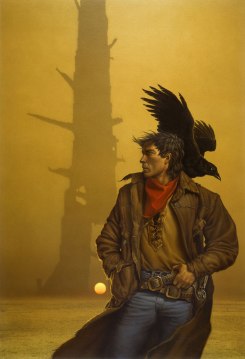
 

2015-The Year of Dating

The giddy songster Bruce Springsteen once sang, “When it comes to luck, you make your own” but I doubt he ever went three and a half years between relationships while in his mid-thirties, while everyone else you know is seemingly in love and married and popping out babies and definitely not going to die alone and get eatin’ by his cat.

Yes, this decided lonely state was the state I’d found myself in the recently deceased year of 2015, and it wasn’t so pretty. The concept of luck-of getting lucky, of making your own luck-seemed laughable. I’d been bobbing along on a couple dating websites (OkCupid, Match.com), I’d been set up by friends and family, I’d randomly encountered some ladies at local watering holes. But actually finding somebody to be in a long term relationship with had started to feel like quicksand-the more I writhed and struggled to find a new somebody, the faster I felt like I was sinking. I started to wonder if women could somehow sense loneliness radiating off me no matter how devil may care I tried to come off, no matter how chill and goofy I tried to play it.

I’ll be honest-I also wondered if deep down I’d stopped truly caring about finding someone else, if my relationship antennae, which had guided me more or less reliably since I was seventeen, through a constant stream of cozy long term relationships, had finally gone down beyond repair. I loved watching TV at home too much, I loved drinking alone too much, I loved being crotchety too much. Way back in college, I’d told my girlfriend at the time I was worried about turning into Ebeneezer Scrooge someday and she’d kindly replied that was impossible, but I’ve continued to harbor my suspicions. Now and again I feel a vague, self-annihilating urge rise up in my heart, something I believe is tied to my mother’s death fifteen years ago and the fact that I’m still alive.

One event from this past year stands out, dating and morale-wise. One summer night I randomly met a cute woman at the bar and we hit it off instantly-she got my stupid jokes! she was good at drinking!-and we drank for a good three hours together, helped along by my wiling wing-man Mark. At the end of the night, long after Mark had departed, I announced I needed to go home and this woman followed me out to the parking lot, the most neon of neon signs that she was interested in me, but at the last moment I panicked and said a hurried goodbye, having seen a flash of metal on her hand and telling myself it was a wedding ring which in retrospect was totally not (and I could have just asked about it, right? The stupefying perils of booze, gentlemen!). I didn’t get her phone number, I didn’t tell her my last name or learn hers. There was a moment of disbelief where she stared at me (not doubt thinking, “Really? REALLY DUDE? YOU JUST CHATTED ME UP FOR THREE HOURS!!!”) and then walked in a stunned way to her car. I stood there, watching her tight booty walk away, and felt a brief, smug feeling of having turned down a pretty girl, which was soon replaced by a wave of self-loathing at my own cowardice and asshole-ness. To quote Red Foreman from That 70’s Show, “You’re too proud? And what to you have to be so PROUD OF?!” I spent the next day sitting at my job staring at nothing, feeling a particularly virulent strain of self-loathing. I would die alone. All hope was surely lost. I spent the next week haunting that same bar, hoping she would magically reappear, but life is not a movie and I never saw her again. It got so bad I even went to the library and tried to get the librarian to give me her phone number based on the library book I’d seen her reading at the bar. Oof.

I went on something like twenty first dates in 2015. Before this year, I’d been on maybe ten in my whole life. These dates covered a vast spectrum of confusion and disappointment (I’m sure often on both ends) and each one left me exhausted. These twenty dates led to about five second dates and perhaps two third dates. No fourth dates, definitely no sex. I don’t know who these people on TV who have sex on first dates are but they do not seem to exist in my reality. Some dates fizzled within thirty seconds only to drag on for hours. Some dates seemed to go well but resulted in silence. Some dates left me paralyzed with indecision. Some dates baffled my comprehension of humanity and I could not understand why the other party agreed to the date in the first place. I dated women ranging from forty to twenty-three. A variety of body types, including one tall gum snapping redhead who wore a leather jacket I liked. I also seemed to appeal to ladies engaged in some way in the legal profession, including a well-known criminal defense attorney. These dates occurred mostly in coffee shops around St. Paul and Mpls though I tried several other activities, like going to the landscape arboretum or bowling. In the aftermath of each date, I sifted through the ash, looking for signs, for lessons learned.

Some hard-earned lessons I came upon:

Nobody is at their best on a first date. They are nervous and this makes them a little uptight. This makes them (and you) say weird shit. One person mentions they like coffee and the other suddenly announces they’ve been to South America. The earnest dater is well-advised to cut the other person a little slack because they might not really shine until that second or fifth date.

Coffee shop dates, while not exactly exciting, are generally the best way to make first contact. They’re cheap and either party can withdraw painlessly after a relatively short period of time. Though I had a couple of these last over three hours and go nowhere.

Makes sure you put important deal-breakers on your dating profile. If you’re allergic to cats, or you only want to date a fellow vegetarian, or you’re baby hungry, save everybody the trouble and state this shit up front.

Physical attraction is an undeniable factor in dating. You can go in with a general sense of what a person appears to look like but until you sit down them for a while and absorb their presence you really won’t know what’s up. I went on several dates with women who were very pretty and cool but simply did not light my switchboard-to daters out there who don’t get that follow up text or call I’d like to say it’s not necessarily (or usually) that you’re not attractive. Human attraction is a baffling mystery.

Weight loss is not everything, though it does make you feel healthier. I lost fifty pounds in mid-2014 and thought it would lead to instant dates and success. Instead a full year and a half passed before I got to debut skinnier Dave in the old bedroom.

Be kind. Everybody you’re going out with, especially in their 30s or older, has gone through some dark water themselves.

Gentlemen, every goddamn woman likes it if you open a door for them. They like small displays of kindness and generosity. You don’t have to buy a fancy dinner and act like a big swinging dick-you just need to act like a raised right man. Somebody who’d they want holding their hand at a difficult hour.

Finally, most importantly, just be yourself. The woman I’m in a relationship now, as of very recently, agreed to go out with me because we both liked to play chess. We both really, really like chess. I wooed her over several chess meetups we agreed weren’t dates and this allowed our relationship to evolve in a less job interview type way. Her name is Jen and she’s really great. We seem to fit each other, which is really the ultimate goal in all this dating effort.

So who would have thought? The answer was in the last place I’d ever expect: my own brain! Life can surprise you. Just don’t give up on it.