(I recently wrote a book on writing call The Glorious Grind: Meditations on Crafting Fiction & The Writing Life and have decided to simply publish it in installments here.)
Chapter Twenty-Seven
The Glorious Grind

One of the most baffling occurrences in the course of humanity’s creative history has been the glamorization of writing. You tell somebody at a party you work in an office on a computer all day while music plays faintly in the background and you drink too much coffee and they’ll be all like yep, yep, sounds like you work as an insurance actuary or perhaps as a claims adjuster or maybe a certified public accountant. What kind of salary does that pay and what are the benefits like? Do you think Patty has any more shrimp stashed in the kitchen?
But tell this inquisitive person you’re a writer and you’ll get an eyebrow raised and a set of certain expectations. What do you write? Are you published? Would I like it? Is your life filled with sun drenched villas and ocean vistas or are you one of those poor and tortured writers who live in cockroach infested studio apartments, living on Spam, Doritos, and absinthe? Rarely will their first thought be “I bet this guy was hanging around in sweatpants until eight PM today” or “Hey, I’m likely the first person he’s spoken to in three days! Lucky me!”
The fact that authors and poets used to be renowned super-celebrities in the late 19th century and the early to mid-20th century just goes to show you how little television and pop music we had back then. As we all know, humans love to set apart certain other humans with various talents and deify them—with the invention of the printing press a whole new order gods and goddesses was created in the hearts and minds of the public. Suddenly pale, weird looking dudes wearing spectacles could suddenly get laid pretty easily if they said they were a writer and everyone was agog when old Charlie Dickens came by to have a reading in their town (some even consider Dickens to be the first pop star. Weird idea, right?). Writing was cool, like being a painter, or a musician, or, later on, an actor in the moving pictures. Writers, known for their drinking, howling, and love of reading, suddenly had a little extra sparkle to them as they walked through a crowd, a little heat in their pocket.
The 21st century has seen this sparkle fade from the profession. The Internet and television have so bedazzled your average citizen with serial programing and cats doing awesome shit that your average mid-list author now possesses the glamor somewhere between a local used car dealer and a well-respected mortician. And you know what? This is probably a good thing. A really good thing. Writers should think of themselves as craftsmen like carpenters and stone masons and leave the crotch grabbing shenanigans to the reality TV stars of this saturated new world. They’ll be better for it, less distracted and feverish in their efforts at being cool and hip. Less vain. Most importantly, they’ll be able to focus more on the task at hand, which is writing their hearts out and making peace with life to their satisfaction before death all too quickly swallows them whole.
I’ve been wracking my brain to come up with a way, in this cumulative essay, to explain once and for all both the glory and the utter grind I’ve encountered in the life of the author struggling to establish a career in modern day publishing. It has occurred to me, after many false starts, to simply follow the standard advice to any author and show instead of tell—here’s a list of all fifteen of my novels, the vast majority of them unpublished, with a brief description of each and their role in my growth. This is basically a roadmap of twenty years of long nights, scorched earth, and blissful creative escapism.
Novel #1
The Nebula Quest
Genre: Sci-fi (quest, space opera)
I began The Nebula Quest when I was fifteen. It started as a short story and I had no idea it would grow into a four hundred page book. It’s your classic quest/coming of age story, owing much to Star Wars. The hero of the story is named Zil and he hails from a race of hairless, gray skinned bipeds called Trindles. For a first novel it has a rather complex, sprawling plot and features a large cast of characters. My mother surprised me one day by getting the novel printed and bound at Kinko’s with its own laminated cover and everything. That was about the extent of my expectations for The Nebula Quest, though I rewrote it several times.
Novel #2
Other Dreams (originally titled The Dreamer & The Ogre)
Genre: YA fantasy[1]
I wrote Other Dreams during my senior year in high school. Quite literally—I started it in September and finished it in May. This book was the first time I’d put a work through over a dozen drafts. Other Dreams follows a twelve-year-old boy named Wesley Vaughn in the early 1990s who has contracted the HIV virus through a blood transfusion years earlier, after a motorcycle accident that also killed his father. Wesley, as the virus blooms into full-blown AIDS, experiences a series of vivid, fantastic dreams in which he’s being chased by a nameless ogre, and as he gets sicker the dreams grow more intense. For several of my in-house readers this is still a much-beloved novel and I did send out about a dozen query letters for it to agents before moving on to focusing on college and writing short stories for the next few years.
Novel #3
Torch Lit
Genre: Literary
Written in the months after Sept. 11th, 2001, I consider Torch Lit to be the worst book I’ve written. It’s about a movie cinema owner named Gabriel who lives in the fictional small town of Paris, Minnesota. Gabriel is sort of this driftless thirty-year-old guy who is still chasing one moment from several years ago where he felt he was “truly happy”. My first stab at literary fiction, I can tell from the summary of this novel alone that the book was doomed from the start. The protagonist never has a clearly defined goal, the plot’s paper thin, and the only real drama comes from the family next door, not Gabriel. I was trying too hard to write a Great Novel
Novel #4
Knocking Over the Fishbowl
Genre: Literary comedy
Knocking Over the Fishbowl started as a fifty page unfinished short story, a really crazy, raw piece of writing, that I wrote after my mother’s death to cheer myself up (and it helped, somehow). I still remember my professor holding the manuscript in his hands and looking at me with a puzzled look on his face. “What is this?” he asked.
Knocking Over the Fishbowl takes place in the surreal suburb of Hungry Hollow. It follows the adventures of Wilson Scraggs, a Vietnam vet recently escaped from a mental hospital, and the eccentric cast of characters he encounters as he tries to rediscover his place in the world. I returned to it after graduating from college and flushed it out into a full-blown comedic novel. After much work and luck, it landed me an agent. While it never sold to a publisher, it paved the way for The Suicide Collectors and the rest of my career. Out of all the books we never managed to sell, I get the feeling my agent still likes this one best.
Novel #5
The Suicide Collectors
Genres: Post-apocalyptic speculative sci-fi, horror
The Suicide Collectors was my first published novel. I started The Suicide Collectors as a side project while I was waiting for Fishbowl to sell, a sort of challenge to myself to see if I could create a new post-apocalyptic world. The book took a major turn for the better when my agent suggested killing off a main character and upping the “grit” factor in the book.
Novel #6
The Cobalt Legacy
Genre: Literary
The Cobalt Legacy was my thesis novel while a graduate student at Hamline University. Uh oh, here again I wanted to write a literary novel, a serious Novel! The Cobalt Legacy is about a young man recovering from a shattering history of domestic violence (his father killed his mother, then himself) who inherits a castle in western Pennsylvania (did you know there are over one hundred and twenty castles in America?) I did a lot of castle-based research for the book. My agent sent The Cobalt Legacy around to some editors but we got no serious bites. Looking back at The Cobalt Legacy now I wince at its naïve earnestness—like Torch Lit, I was trying too hard to be whatever my conception of “literary” was at the time, which was very grad school-esque.
Novel #7
Wormwood, Nevada
Genres: literary, science fiction
Wormwood, Nevada was my second published novel, part of a two-book deal with St. Martin’s Press. I felt an enormous amount of pressure to come up with something equal to The Suicide Collectors but stubbornly avoided writing a similar book, something that would have been much easier to market than literary sci-fi. The initial reviews weren’t great and the book didn’t sell much and St. Martin’s Press never really put their shoulder behind it. I still love Wormwood, though, and I am proud of how it turned out. I wouldn’t change a word.
Novel #8
From the Void
Genres: Thriller, Dark Fantasy
From the Void tells the story of Derrick Woods, a young man who wakes up with amnesia and escapes police custody. He goes on a very unglamorous cross-country quest to figure out who is he is and what he’s done. He’s followed (or believes he’s followed) by a menacing giant named Carthage.[2] He learns that he was a gunman in a deadly campus shooting and must somehow come to terms with this.
From the Void had some great scenes and Carthage was a top-notch dark fantasy villain but the whole thing never really came together despite a lot of revision. This was post-Columbine but pre-Sandy Hook, when the real world gave us a horror no editor would have thought to be “believable” enough to “carry a novel”.
Novel #9
The Ragged Mountains
Genre: YA Fantasy
The Ragged Mountains, a fantasy adventure story about three young people on a rescue mission, almost sold as the first in a trilogy to a Big Five publisher. I actually took a phone meeting with an editor who told me how excited she was to be working with me etc. only to learn the next day the publisher would have to pass. Some big fish in the marketing meeting didn’t like the sound of the book and overruled the editor. This was the second time this had happened to me—I also took an “it’s going to be great working together” phone meeting with an editor for Knocking Over the Fishbowl, so I’ve had the pleasure of my heart being uplifted and then promptly stomped on twice!
Somehow that meeting spread bad mojo and the book never sold. I liked it so much, however, that I published it myself as an e-book and did a whole (mostly useless) round of PR for it. This novel is my big never-made-it-through-traditional-publishing regret.
Novel #10
The Floating Luminosity
Genres: Literary, Fantasy, Surrealism
Even trying to describe this book is difficult and a sure sign I hadn’t yet mastered the idea behind the elevator pitch concept. The Floating Luminosity was set in a fictional town on the Oregon Coast and is its main protagonist is a lonely retired guy named Gordon Locke. When a luminous blue light starts rolling in off the ocean strange things occur in Gordon’s life and he befriends a young woman with a kid. Things grow stranger from here on out as the story veers into surrealism.
My agent sent the manuscript to three editors to test the waters before declining to represent it and I couldn’t blame him. The Floating Luminosity doesn’t exactly scream marketing potential but it was an interesting experiment (though, alas, it was another year of labor without monetary recompense).
Novel #11
Special
Genres: Literary, Horror, Dark Comedy
Set in the burned out edges of Detroit, Special was about an amiable, specially-abled fella named Tompkins who finds himself under his murderous older sister’s thumb after the death of their parents. He escapes the house with one of her would-be victims and events escalate from there.
Special is weird, really weird, and I shouldn’t have been surprised that it never sold, despite some great feedback from editors (one editor wrote, “I can’t say I loved this novel (doesn’t feel like a novel that even wants to be loved), but I admired the hell out of its ambition…”) but I consider Tompkins one of my best characters and he’ll always have a special place in my heart. Sometimes you just write what you have to write.
Novel #12
And the Hills Opened Up
Genre: Western, Horror
Neither Westerns nor horror novels are selling spectacularly these days so of course I wrote one that spans both genres and goes all in. It never sold to a mainstream press but And the Hills Opened Up did eventually become my third published novel, ending a hard, endlessly churning period of five years in my career without outside publication. The publisher was a micro-press called Burnt Bridge, founded by Jason Stuart with the later addition of Mark Rapacz, who, besides being my good friend from grad school, was my editor for And the Hills Opened Up and a great champion of the book. Without Mark this book never would have seen the light of day or been so beautifully published in the spring of 2014. The day Hills received a starred review from Publisher’s Weekly was a great day for micropublishers everywhere.
Novel #13
Genre: Literary YA
The Firebug of Balrog County
My fourth published novel, this one was picked up by FLUX, which is an imprint of Llewellyn Worldwide. As I type this it’s due out in the fall and I’m holding my breath that it will make some noise and allow my career to progress. Otherwise it’s back in the cage for old Dave Oppegaard!
Firebug is my most personal novel and draws on my own youth and the trauma of watching your mother slowly die. It’s also very humorous and crazed. It is the novel I decided I would write if I knew I only had time to write one more novel before the world ended.
Novel #14
Bring Her Back
Genre: Thriller
Still trying to get my finger on the pulse of publishing and go big, I wrote my first straight up thriller/crime novel. A Russian mobster’s fiancée is kidnapped and it’s up to PI Blake Boon to bring her back. There’s some great action scenes in this one but I was obviously out of my genre element this time and it shows. My agent said it would take a lot of work to punch Bring Her Back into prime shape and I decided to cut my losses after six months of writing and move on—I just wasn’t interested in the story enough for that kind of commitment.
Novel #15
The Town Built in Darkness
Genre: Literary YA, horror
My current project. As described in the earlier chapter about revision, I’ve written roughly 1,100 pages, or three full nearly-from-scratch drafts, to come up with a 270 page story. Hopefully this project will have sold by the time you’re reading this but, as you can see from this very history, that’s not exactly a sure bet. It’s YA horror with a dash of Laura Ingalls Wilder.
So that’s the list! If you think it was exhausting to read fifteen descriptions of some dude’s work just imagine writing every one of those motherfuckers. Sweet fancy Moses, looking back at some of those descriptions I have to wonder if I secretly didn’t want to get published or establish a career. Was I self-sabotaging or following my bliss? I guess we’ll never know. Or maybe sometimes they are the same damn thing. Maybe I’m a modern day Ancient Mariner, doomed to wander from wedding to wedding babbling about strange lights and dead birds. Maybe I am insane. Maybe the Grind has finally driven me mad!
But I feel pretty good. If this is madness, it’s not so bad. Despite all the desk time, I have had many a writing adventure and look forward to many more. I have invaded the Flat Iron Building in Manhattan for one morning and I’ve hung out with my agent at his favorite Brooklyn bar. I’ve taught writing to kids in the Boise foothills while the owls slept above us in the trees. I’ve driven around central Nevada for research purposes and bathed in its alien light. I’ve read at the Turf Club in St. Paul and the Loft Literary Center in Minneapolis and at my mother’s hospital bed. I’ve loitered in many a coffee shop and library. I’ve flown out to Burbank for an award ceremony and ended up getting drunk on the roof of a hotel, staring out at the sparkly fog. I’ve spent a weekend autumn camping in Decorah, Iowa while attending a writing conference, where I listened to migratory geese pass above my tent all night, softly honking. I’ve gotten very kind emails from readers who my work resonated with, readers who have dealt with suicide and depression, and I’ve helped at least a few students improve their writing and approach the publishing scene with their eyes a little wider.
I’ve also studied under some of the smartest and generous folks you ever want to meet, the kind of people who make you want to be better and kinder yourself, even if you often fail miserably. Though I am no perfect human being now, I can only imagine what kind of shiftless dolt I would have become without having writing in my life for so long and in such a focused way. Writing has been my great solace and my sexy tormentor and it has made every aspect of my life a little more interesting. Really, I am so lucky to have gotten this far I can hardly believe it.
There is glory to be found in the writing Grind, true, glory of many kinds, but when all is said and done you need to remember that nobody cares about what you’ve gone through to bring your work to the page. Writing is truly a nobody-wants-to-see-how-the-sausage-gets-made industry. Once your work is out there, shared with the world, it must stand or fall on its own without you. All the hours spent alone, grinding out word after word, toiling in the austere face of futility, belongs to you and you alone—this is the writer’s burden and great treasure.
[1] Though I didn’t know what Young Adult fiction even was back then. I just thought it was fantasy.
[2] It occurs to me only now that Carthage is an echo of the unnamed ogre in Other Dreams, though I’m no longer surprised by how much I plagiarize myself.
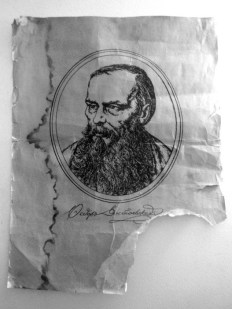


 David Oppegaard