(I recently wrote a book on writing and have decided to simply publish it in installments on my blog. Because this is where all the money is. Blogging.)
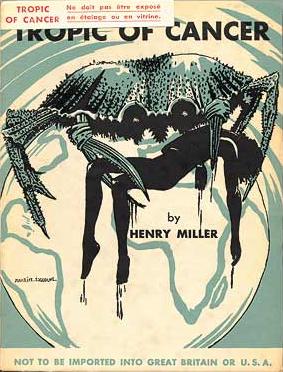
When I reflect that the task which the artist implicitly sets for himself is to overthrow existing values, to make of the chaos about him an order which is his own, to sow strife and ferment so that by the emotional release those who are dead may be restored to life, then it is that I run with joy to the great and imperfect ones, their confusion nourishes me, their stuttering is like divine music to my ears.
-Henry Miller, Tropic of Cancer
Chapter One
Introduction
Like any interesting story, the life of a fiction writer is filled with conflict. A writer writes to share some burning kernel inside their heart while basically sequestering themselves in a world of their own creation for several months or years, happily allotting enormous chunks of their time to ignoring the physical world around them in favor of the fictional world they’re attempting to build on the page. Writers want everybody to read their work but they don’t necessarily want feedback, constructive or otherwise, from every goddamn person on the planet. Writers want their work to resonate with a vast swath of the book buying public while still producing something deeply personal, something with a stamp on it that says, “Hey fuckers! This book could have only sprung from MY brain and you’re fucking lucky to have it! Yeah, pal, that’s right. You’re lucky to have me living and breathing and producing this high quality literature for your eyes, brain, and heart to consume!”
Writers seek the love and approbation of friends, family, and coworkers while still hoping their work startles their loved ones, or at least slightly offends them, with its soul searching fierceness, searing dissection of reality, and overall jaw dropping, ass kicking merits. Writers don’t want the knowledge, once discovered, that they’re a writer, that they’re writing a novel, to be passed over lightly in polite cocktail party conversation, as if they’d just announced they loaded the dishwasher earlier that day, but on the other hand they don’t always want to talk about what the book’s about, either (c’mon, dude. Talking about the book inevitably lessens the power of its content. That’s why I put it all down in novel format in the first place! What is this, some kind of pitch meeting where I put forth my precious idea, my hopes and dreams, for you to either praise or smack down? No, it’s not! Last time I checked this was a boring old cocktail party with elevator jazz playing in the background and too few cocktail shrimp for the amount of individuals invited. Yeah, you heard me, Patty! Not enough shrimp!).
Writers want to read other writers and be astounded by the high level of talent on display, talent they can themselves be inspired by and learn from and enjoy like any other reader, but they also secretly pray the talent they’re enjoying on the page doesn’t somehow negate their own talent, their own work, and the thought that there’s only so much room on humanity’s bookshelf and their own (im)probable spot on that bookshelf when all is said and done sits on their shoulder day and night, whispering futility futility futility….Yes, I’ll admit it. We’re all friends here, right? (Except you, Patty.) Writers want to be the Chosen One. Writers chase the nebulous concept of penning the Greatest Novel Ever like the great white buffalo it is, a creation on par with unicorns and one-eyed ogres and a really delicious zero calorie double IPA.
Writers also want to be cool, but they’re really not cool per se (how many writers, do you think, get to skip a long nightclub line when the bouncer recognizes them and waves them in?).[1] Writers want to be rock stars but they don’t really want to be in a band—they love their own sound too much. They’re solo artists at heart, even if they dabble in the occasional duet. A writer is that lone gunslinger, slowly striding across the desert at his own pace, the wind howling lonesome in his ear and throwing sand in his face. A writer is Emelia Earhart, flying solo above a vast ocean while her Lockheed Model 10 Elektra rattles and roars around her, her return to solid land not necessarily a certainty.
Writers are used to long periods of productive isolation and all the comfortable laxity in dress and hygiene and diet that attend such periods, those long yet paradoxically swiftly passing hours when the mind is so busy working to create an viable fictional universe that all else falls aside, like clothes at an orgy. Writers spend a lot of time cultivating their inner world until it’s shiny and intriguing enough to share with the outer world through the medium of the written language, which both frames their thoughts with all its weird rules and tangled laws and pours their thoughts into a mold that’s pliable right up until the final draft is sent to press and those words become bond. Writers flourish in the dark yet yearn for the light of exposure and praise. Writers head into the deep hollows of their own hearts and search for something on fire, something with real heat to it, something fresh, in hopes they can triumphantly return home again with a blazing new torch to hand off to the rest of the world.
Which brings me to the greatest conflict in the life of the writer of all—the urge to write as much and about whatever they want while still making a reasonable living. That yearning to wake up whenever you feel like it, not go to some soul sucking day job, and proceed to spend the day working on your short story, your novel, without worrying about some artificially imposed schedule. For a writer there’s no better time of day, no moment when they feel more free, than when they finally stop dawdling and lean joyously into the harness and begin to pound out sentence after sentence, each inspired word a peppy little crack-crumb that keeps them going to the next, and the next, until they’re finally exhausted and their mind feels wiped clean of the nameless daily discontent that troubles them, impelling them to write. They may not feel great about what they’ve written during every session, they might even feel like it’s straight-up shit due for deletion the next day, but they’ve written something, damn it, they’ve enjoyed those minutes or hours of writing freedom and that cannot be taken away from them no matter what fresh plague life may choose to send upon them.
To one day live the life of the working, day job-less writer is the dream of many writers, particularly beginning writers. To grab that big book deal, sell a ton of copies, and live on the money generated by your own goddamn writing is a pretty fantastic dream, I have to admit, but a goal not without its own inherent conflicts. How is one supposed to write about the world if they’re cooped up in their home office all day? How is one going to create a wide array of interesting and well-rounded characters when they spend most of their day either alone in their house or amid the chattering isolation of a coffee shop?
As someone who’s held a variety of jobs I can say that as much I disliked and in a few cases felt crushed by my day job at the time each job introduced me to an array of personalities and situations that would have otherwise never occurred to me. You work a job, but the job works you, too, and you learn things from work and your co-workers even if you do so while kicking and screaming and horribly hungover. How does one amass continued “life experience” if they somehow pass through the publishing needle early in life and suddenly find themselves with writing as their one and only job? Volunteer in soup kitchens? Travel? Walk around town all day watching people and waiting for an exceptional experience to occur? Put on an ewok costume and ride the New York City subway for a week?
Of course, the potential ivory tower isolationism that awaits the writer who finally has “made it” is a true two percenter-type problem and those lucky enough to have it would be advised to keep their traps shut and keep smiling for the starry-eyed multitudes. The other ninety-eight percent of writers must merge writing fiction with some other occupation that pays the bills (or at least provides the illusion of paying the bills to our many frothing creditors). Writers must often bus tables, sell insurance, pick up trash, teach (and oh how they teach! They teach endless multitudes, endless classrooms hours! Fucking prep work! Fucking students ignoring perfectly clear and straightforward syllabi! Fucking droning presentations!), bag groceries, work on cruise ships, flit from crushing temp job to temp job, make coffee, man reception desks, sell flowers, score standardized high school tests by the hundreds, stock shelves, marry rich assholes and raise their asshole kids, work as support staff at a sea of universities and technical colleges, manage bookstores, edit magazines, write technical articles, write screenplays, write banal web content, write TV reviews, write restaurant menus, sky write using an airplane, write blunt ransom notes as part of elaborate pet kidnapping schemes, write…okay, you get the idea.
So how to handle your inevitable daytime occupation (or as I call it Not-Writing) while retaining enough energy and spark to write on a frequent basis with plenty of fire in your belly and a gleam in your eye? Ah, that is the question to end all writerly questions, one each writer must confront and decide on their own. Undergraduate students attend college not only to gain book knowledge and drink beer in a festive setting but to buy themselves time to figure out what they want to do with the rest of their lives. Graduate students enrolled in a creative writing program, who are often already well along in their adult lives, are also buying time for themselves—time to hone their writing skills, time to sit in a class and meditate solely upon writing, time to justify writing while their own lives whirl around them, family and friends and day jobs clamoring, as always, for their attention.
Yet school ends for everyone, sooner or later, and many writers may never go to college at all, much less grad school. The fiscal demands of the world intrude upon the budding novelist or short story writer, forcing them to parcel out time to various activities in their life. This is one reason teaching has been popular for writers—if you teach you get entire summers off (though even this oasis may disappear as the possibility of a year-long academic calendar becomes more prevalent at various educational levels) and during that splendid three month period you can surely pound out a novel or a short story collection or whatever. Of course, this requires the writer-teacher to shift gears from nine months of structured sleep deprived overwork to unstructured, self-motivated time sensitive overwork, which isn’t exactly a recipe for the type of relaxed, investigative mindset one needs when building a new world with new characters in it. The idea of writing a book length work during the warmest, dreamiest months of the year after teaching over a long winter is like a soldier coming home from an extended campaign and waking up the next day ready to spend three months building a house from scratch. A house he loves and has great hopes for, sure, but he’s still sweating his ass off when he should be recuperating and readjusting to civilian life, resting his bones while turning his face to the sun.
Yet teaching is apparently the overwhelming favorite of the working writer[2], with the tenured collegiate position the most attractive at all, which I suppose speaks to the inordinate amount of difficulty the average five days a week, twelve months a year working writer has in balancing work, life, and writing. Holding a day job is truly when a writer is tested by fire and they learn how bad they really want to pursue the craft of writing, if they can give it the amount of time and dedication it demands. Some writers get up early and write before anybody in the house wakes up and their mind is rested; some writers wait until the end of the day when the house is quiet and plug away into the night with only their dozing pets for company. Some writers snatch their writing time as if they’re grabbing a pebble from the hand of a kung fu master, writing during their lunch breaks or while riding the bus or during those brief respites when their kids aren’t howling at them for juice and cookies and blankie.
How a writer decides to parcel out their writing time is a highly personal decision that must be grounded in a high level of self-awareness.[3] Are you a night owl or an early bird? Do you work best in a quiet monastic environment or do you like a rowdy coffee shop? How much coffee can you drink before you start writing like a hopped-up Beatnik? Do you want to write like a hopped-up beatnik? How much sleep do you need to fully process what you’re working on? Can you produce quality writing in short bursts or do you need vast swaths of time to generate prose worth saving? Can you keep your friends and family at bay without alienating them? Can you handle being alone with your thoughts and the dark roads they will lead you down? Are you willing to? Can you go an entire day without speaking to another living person yet feel you’ve lived richly on the page?
Personally, I’ve long accepted my own limitations as a writer and a human being and adjusted to them accordingly with an eye toward my writing. I need a lot of sleep to produce what I consider high level writing and I take a nap nearly every day when I come home from work. I’m a workhorse who slowly pulls his load, day after day, writing and rewriting until I look up surprised to find I’ve finally reached my destination. I’m thirty-five years old and I’ve written fifteen novels, one screenplay, numerous short stories, some poems, and ten years plus of blog entries. I’ve never held an exceedingly stressful job that I took home with me at night and I have a strong aversion to business meetings. I’m not married. I don’t have any kids. I’ve floated through the workforce for fifteen years and have only recently lucked into a job that doesn’t drain my soul and leave me itching to quit every afternoon. I’ve never really been interested in having a day job at all, really, but I like talking to people about their own. I like work. I like Studs Terkel. I also think writing is its own standalone job and that pursuing it requires much more effort and dedication than the average person believes.
That’s not to say writing is all sunshine and moonbeams. Writing is a grind, however glorious it may feel at times, when the writing is good and you feel as if you’re soaring through page after page, with Ultimate Reality somehow in your grasp. Writing is sitting down in a chair day after day and staring at a blank screen. Writing is sometimes staying home in the evening when your friends are going out. Unless you have a publisher’s deadline or a story due for workshop nobody really cares if you write today, or if you write tomorrow, or if you never write another word again (and even a publisher’s patience can be tested only so far). Like a vast tract of wilderness, writing is beautiful and sublime and inspiring yet it doesn’t give a shit if you live or die and ultimately you’re a very small speck against a much bigger backdrop, no matter how long you’ve spent dwelling among it or how badly you want it to love you back.
I’ve written this book to act as a friendly companion for writers of all levels, especially newbies. I’ll be discussing fiction craft—the nuts and bolts of writing, with a focus on the novel, which is my grand passion—and interjecting meditations throughout on the writing lifestyle as I see it, with the occasional biographical anecdote, which, like this book as a whole, I hope prove either illuminating or at least amusing. I’ve taught a few writing classes, both at the community and the graduate level, but all told they only add up to about two hundred classroom hours, which I’m well aware is only a drop in the teaching ocean. I have no claim to grand credentials besides being a multi-published author who’s been writing and reflecting on writing fiction for over twenty years. The word “bestselling” has never been attached to my name.
The thing about creative writing, and all art, is that the process that works for one writer rarely works for another. Everything I remark on in this little tome should come with the classic “in my own opinion” disclaimer (I’ll just say that once, up front, and save everyone the trouble of reading that cowardly little phrase throughout the rest of this book—I’m not really hurling absolute imperatives from a masterly mountaintop, I just prefer clean prose). If anyone ever tells you they know exactly what’s going on in a piece of fiction and how best to fix it, as if the mysterious and often infuriating process of fictional composition adheres to absolutes, follow Zen Master Linji’s advice: “If you meet the Buddha, kill him.”
I’ve assembled this book in a loose approximation of the process of writing a novel and pushing it out into the world using the traditional agent/publisher model (which isn’t going away anytime soon despite reports to the contrary). I’ve packed everything into it I wish I’d been cognizant of twenty years ago but had to learn the hard way. I’ve always been a fan of books on writing, which are both legion yet seem to be an inexhaustible medium with room for everybody, just like fiction itself. Every veteran writer has both a story and hard earned advice, just like they have a heartbeat.
Here’s mine.
[1] Trick question! Writers don’t go to fucking nightclubs! A nightclub is like a pit of despair to a writer, like a middle school dance crossed with drinks they can’t afford to buy because they’re writers.
[2] The one and only AWP conference I’ve attended confused the hell out of me. AWP stands for Association of Writers and Writing Programs but it struck me as basically an industry conference for academics and their students. I was constantly asked where I taught and I could only sheepishly reply that I was “just” a writer, which garnered me some confounded stares. (This was a few years before I myself dabbled in teaching.)
[3] I was at a party once and an old friend with three young kids told me he wanted to write a novel sometime. I told him he’d need to kill his kids. He laughed but I just stared back at him with a haunted, Ancient Mariner-like gaze until his laughter grew uncomfortable.
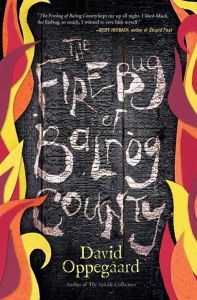


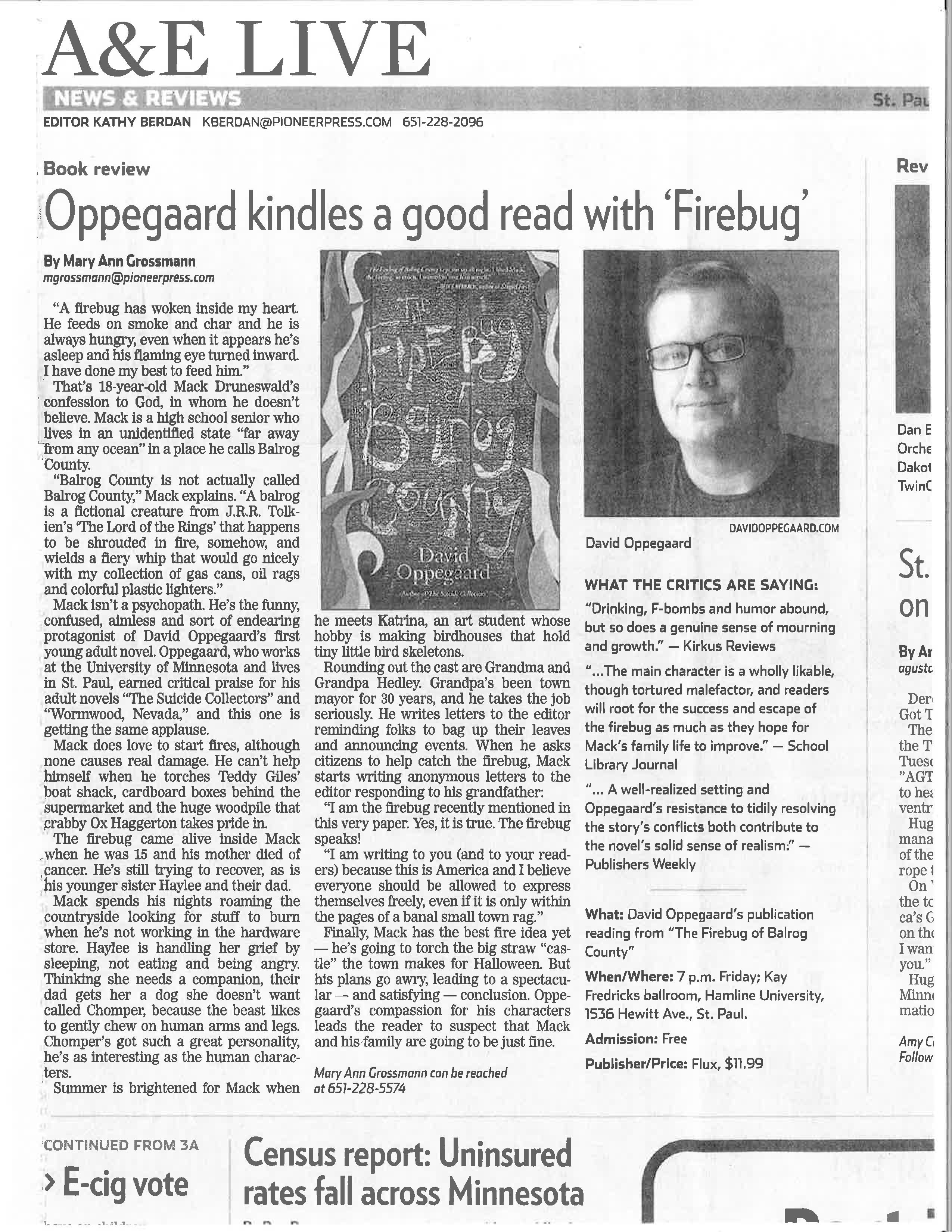

 David Oppegaard